

Smart Work 2026: The Movement in the Classroom Model
The Smart Work page presents everyday innovations and success stories developed by the employees of the City of Hämeenlinna.
An amendment to the Basic Education Act requires schools throughout Finland to provide, among other things, break and recess exercise starting from 1 August 2026. Local curricula have already begun to show a clearer aim to increase movement during the school day.
Classroom teacher Saku Kuparinen has for years used, among other things, the Embodied Learning method, which emphasises movement, in his own teaching. Alexandra Koulik and Noora Omsha are also strong advocates of movement and embodiment. Together, we have developed and introduced a concept for increasing movement during the school day. We have named this the Movement in the Classroom Model, which is based on six core pillars. The model is easy for any teacher to implement in their own classroom as a natural part of the daily school routine. Of course, we hope that as many classes as possible will start implementing the model, either as it is or in an adapted form. This does not require too much effort or extra work from the teacher — it is a low-threshold model with significant benefits.
We have noticed that this has increased pupils’ stamina, enthusiasm for studying, positive attitude towards school, body positivity, and sense of community. We have also received positive feedback from parents and guardians. The growth in pupils’ physical activity and enthusiasm for exercise are by no means insignificant outcomes either. Promoting public health and adopting healthy habits, as is well known, begins already in childhood.
The six core pillars of the Movement in the Classroom Model
- Morning yoga/morning routine:
- The school day always begins with a short breathing-paced exercise routine that opens up the body and mind. Typical movements include forward and backward bends that open up the thoracic spine and the back chain. From there, we move on to a deep squat, which improves and maintains mobility in the ankles, knees, hips, pelvis, and lower back. Before all this, however, we spend a quiet moment breathing calmly while standing.
- This routine calms the pupil and opens up the body, making the pupil more ready to learn.
- Movement breaks:
- Sometimes at school, pupils sit still doing tasks for quite long periods. We try to avoid sitting still for too long. When a pupil starts to show signs of losing concentration, it’s time for a movement break. Or, for example, during a maths lesson, if a pupil has been working hard for a long time, they can come and ask the teacher for a movement break. The teacher then grants permission for, for example, a lap around the field, walking up and down the stairs, or some other short activity. The break lasts about 3–5 minutes, depending on the teacher’s judgement. Some might say that pupils shouldn’t be allowed to go off on their own, but pupils also go to the bathroom on their own. In many schools, pupils also sometimes work in spaces that aren’t within the teacher’s constant line of sight — for example, when doing group work. With younger pupils, this naturally needs to be adapted, but with older pupils, this shouldn’t be a problem.
- Lunch-break exercise:
- After eating, pupils can go to the gym under teacher supervision to move around freely for about 15 minutes. Popular activities among our classes include volleyball, indoor football, climbing ropes, hoop tricks, frisbee throwing, acrobatics, tag, and dodgeball.
- Lollipop challenges (a lollipop as a reward for a successful performance):
- The purpose of the challenges is to teach perseverance and practice towards a goal.
- Our classes have several ongoing challenges that pupils can practise during recess and in their own time at home. The challenges relate to motor skills, muscular fitness, movement skills, balance, self-improvement, and so on. A challenge must be difficult enough that no one succeeds at it right away, but only after a lot of practice — even if that takes as long as six months.
- Challenges our classes have had, and some that are still ongoing, include pull-ups, soccer ball juggling, volleyball bumping, basketball dribbling between the legs while walking, single-leg squats, walking on hands, jumping from the five-metre platform at the swimming pool without hurting oneself, dips, and various body-control movements (such as the “King/Queen of Ipanema”).
- Dance move of the month for the class:
- Every month, the class is taught a dance move — either a well-known one or one invented by the teacher — which is then danced together in the classroom as a so-called “movement snack” whenever it feels right.
- Whole-school dance break once a week:
- The dance break is always led by a dance leader. In this role, especially in joint comprehensive schools, older pupils can also take part. Here at Jukola, the autumn dance breaks are, at least initially, led by teacher Alexandra.
Developers
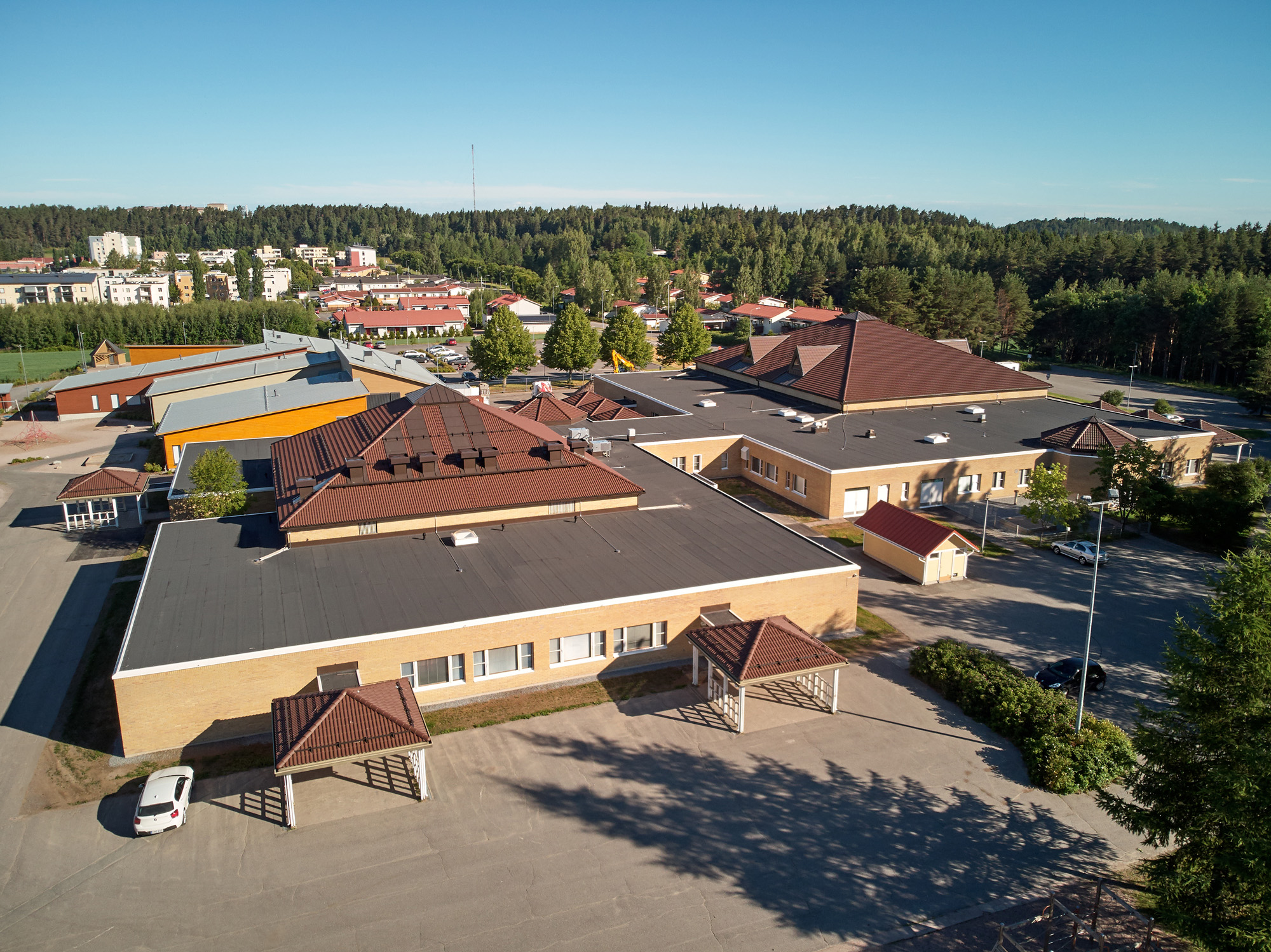
Saku Kuparinen, Alexandra Koulik, and Noora Omsha, teachers at Jukola Comprehensive School