
Kotikaupunkilainen
Does talking about bullying make you uncomfortable?
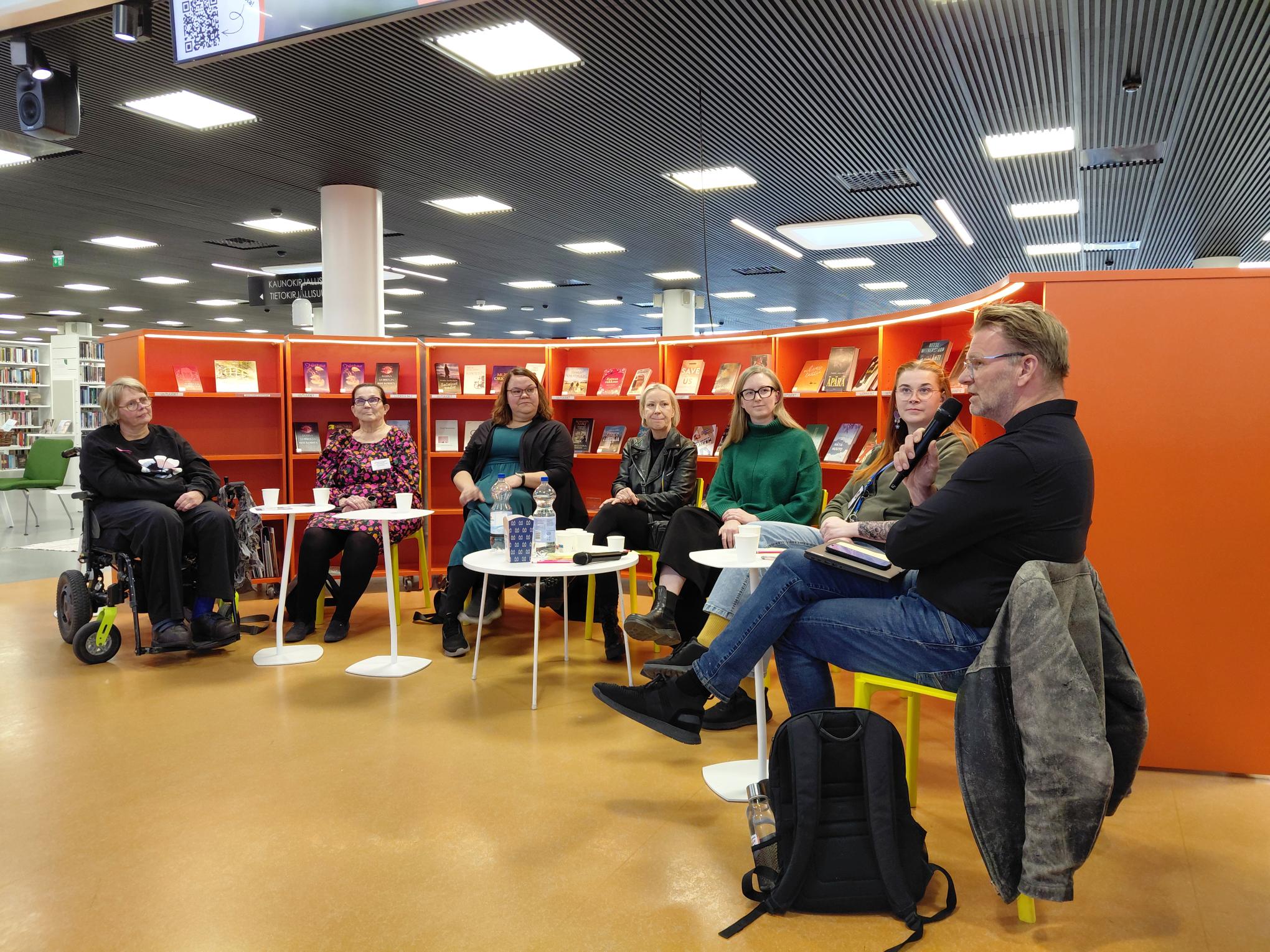
On Tuesday, October 8, the Hämeenlinna Council on Disability organized a Timeout dialogue titled ‘Does talking about bullying make you uncomfortable?’ at the Hämeenlinna Main Library. Timeout is a discussion method that aims for a deeper understanding of a topic and invites diverse people to engage in an equal conversation.
The discussion was moderated by Markku Rimpelä, Strategy Director for the City of Hämeenlinna. Participants included Pia-Nina Mohr, Chair of the Council on Disability; Anni Kyösti, Researcher at the University of Turku; Johanna Kare, photographic artist; Kirsti Suoranta, Chair of the Council for the Elderly; Katariina Mikkonen, youth worker; and Merituuli Stenberg, children’s author. In the Timeout method, the audience also participates in the conversation, and the discussion remained lively throughout the event.
The Council on Disability has long wanted to organize a discussion event on bullying, and the initiative was also included in the council’s annual plan. During the event, we realized how important it was to hold this discussion. Nearly everyone present had personal experiences with bullying. Participants bravely shared their stories of being bullied, being the bully, and witnessing bullying in schools and workplaces.
The discussion explored how to approach a subject as broad as bullying. It was noted that bullying extends beyond the school world into society at large—workplaces, social media, and leisure activities. Bullying can be both mental and physical. It is not limited to children; adults can also bully one another. The conversation also touched upon when we should speak of bullying and when we should speak of violence.
Parents whose children had been bullied were present at the event. The bullying of one’s own child or a child close to them was experienced as a deeply emotional issue. This sparked a discussion on how we could prepare parents and guardians to handle their child being bullied. How do we act when a child says they have been bullied? How should adults encounter a child who has been bullied?
The role of adults as role models was highlighted. Children and young people follow the example set by the way adults communicate. Social media and the discussions held there were specifically mentioned. Comment sections on news articles, posts by influencers, and the culture of discussion in online groups are reflected in our physical world and interactions.
‘Does talking about bullying make you uncomfortable?’ was considered an important discussion event. Participants were pleased that those who attended found the topic significant and were able to discuss a difficult subject. At the end of the discussion, it was concluded that we must look after one another and not leave anyone alone.
The thoughts sparked by the discussion are summarized in a poem written and recited by Oona Kare during the Timeout dialogue:
“Difference is a frightening thing for people. The cloak of shame closes the hearts of the hurt. If another is different, a person wonders: what kind of fish is that in the aquarium? Will it eat us? We are animals, but we feel we have the same laws as they do: eat those who stand out from the crowd. Yet we are humans, supposedly the most intelligent animals on this planet. It is frankly sickening how tunnel vision has blinded us. How like sheep we have become. One would think our intelligence would enable us not to destroy each other. But rather to be one people in this world. A human race that would not destroy each other like predators, but would use both their brains and their hearts.”
Author: Mari Hyvärinen, University Intern for the City of Hämeenlinna