
Kotikaupunkilainen
Swimming school strengthened the inclusion and self-confidence of women with immigrant backgrounds
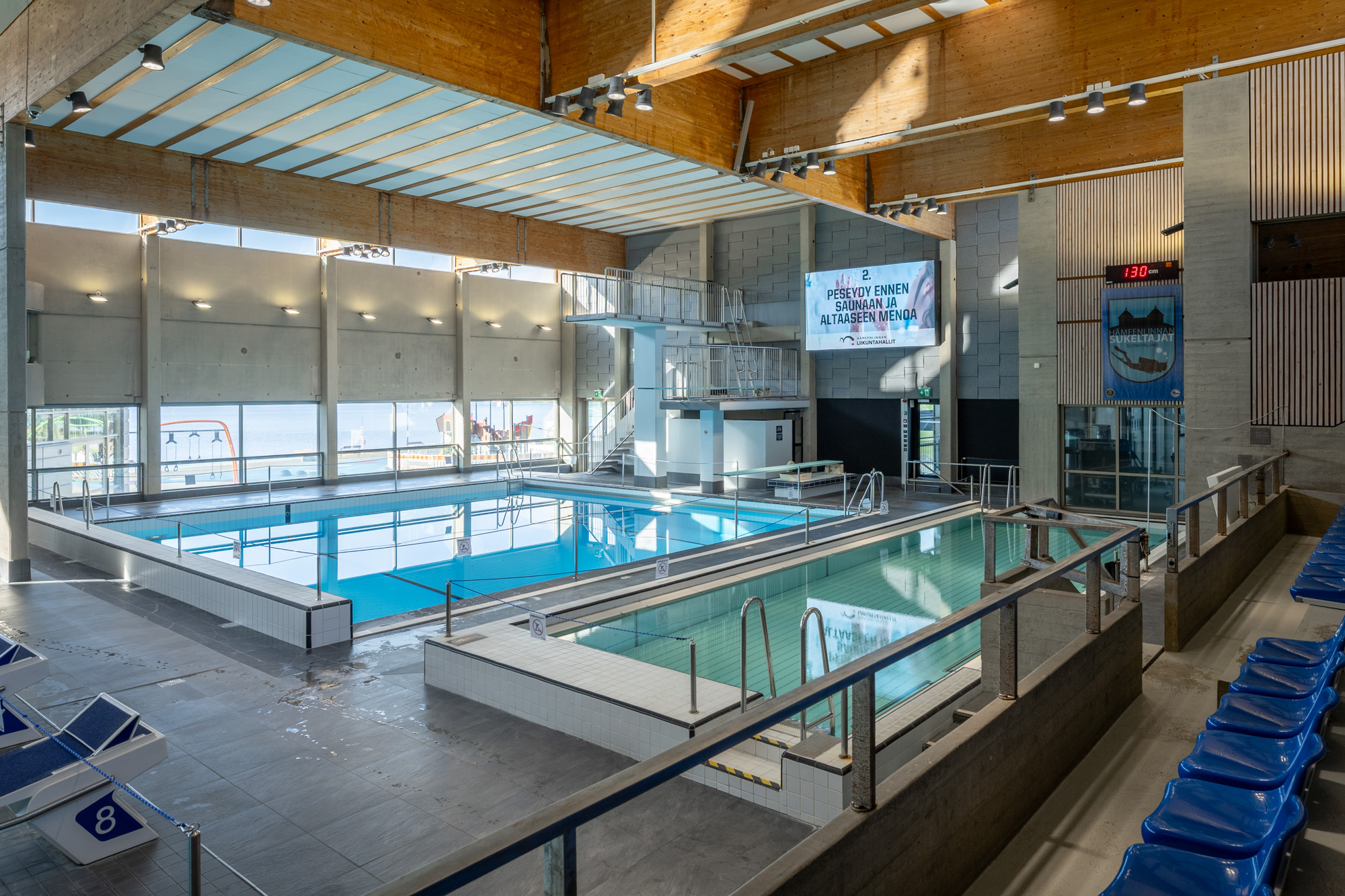
A swimming school organized in Hämeenlinna for women with immigrant backgrounds offered participants much more than just the opportunity to learn how to swim. Over eight weeks, the swimming school boosted self-confidence, increased experiences of inclusion, and created new friendships.
The idea was born on the shores of Ahvenisto
The idea for the swimming school was born last summer based on conversations held on the shores of Ahvenisto. Many women with immigrant backgrounds expressed a desire to learn to swim, but finding a suitable and safe environment was difficult.
“Hämeenlinna has many lakes and water bodies. Many mothers felt sadness because they could not participate in swimming or other summer water activities with their children and families,” say social services students and swimming school organizers Zarife Kurt, Aysegul Mamak, and Rabia Soylu.
The idea led to a development-based thesis aimed at creating a low-threshold swimming school for women with weak or non-existent swimming skills. The thesis was commissioned by the City of Hämeenlinna’s International Residents’ Services, where Kurt and Soylu also completed a two-year internship as part of their studies.
A safe space for learning and encounters
The swimming school was implemented based on the principle of “Women’s Turn and Friendship.” Key starting points were a safe atmosphere, community spirit, and cultural sensitivity.
The activities took into account the participants’ diverse cultural backgrounds, the need for privacy, and low-threshold participation. The group provided an opportunity to learn swimming skills in a peaceful environment without fear of shame or failure. Plain language was used extensively during the swimming school, as the participants’ common language was Finnish.
The swimming school progressed in stages from practicing swimming centre rules, moving in water, and the basics of swimming skills toward independent swimming. During the course, participants practiced breathing techniques, floating, diving, gliding, and swimming techniques. Additionally, participants learned water safety skills, such as self-rescue from water and safe conduct in the water.
The swimming school was much more than swimming instruction
However, the activity was much more than just learning to swim. According to the students, the swimming school demonstrated the great significance that safe and communal activities can have for the participants’ well-being, courage, and daily lives.
“The women’s joy in the water was worth seeing. They made very good use of every minute in the water. It showed us how important and necessary this kind of activity is,” the students say.
For many participants, being in the water was a first-time experience in their lives. One participant mentioned that long-standing pains were relieved for a few days after the swimming school.
The swimming school also had significance from a social perspective.
“This wasn’t just a swimming school. We also made many new friends here,” one participant states.
A meaningful project for the students as well
Planning and implementing the project was an important experience for the students.
Mamak emphasizes the importance of the activity in supporting well-being: “Based on my own experiences, I know that women who have moved to a new country can have a lot of stress related to integration, learning the language, and building a new life. This kind of activity was almost a therapeutic experience for many. At the same time, it supported learning about Finnish swimming culture and water safety.”
Kurt also felt the project was personally important: “It was meaningful for me to be able to participate in solving a current challenge related to the lack of swimming skills. It was great to see how much courage and self-confidence the women gained during this project.”
Continuation of activities from the thesis
As the swimming school ended, all participants hoped for the activities to continue. Thanks to the positive feedback, the students are already planning a new swimming school at the commissioner’s suggestion.
“The women constantly asked us if a follow-up course would be organized. They said that if one is held, they definitely want to join again.”
The students feel it was particularly meaningful to implement a successful and practically impactful project in their own hometown. The activity also supports the City of Hämeenlinna’s goals related to safety, well-being, and inclusion. Strengthening swimming skills increases safety near water bodies and lowers the threshold for participating in shared leisure activities.
The swimming school was implemented as part of the thesis Supporting the Empowerment and Inclusion of Women with Immigrant Backgrounds in Hämeenlinna through the Development of Swimming Skills – Women’s Turn and Friendship. You can read the full thesis on Theseus. The students thank all parties involved in the cooperation.
Written by Zarife Kurt, Aysegul Mamak, and Rabia Soylu