Kekri, also known as keyri, köyri, köyry or kööri, is a traditional Finnish autumn festival with roots in European agricultural culture. Originally, Kekri was celebrated in honour of the spirit or deity of the land, who was believed to protect the cultivation of crops and ensure the fertility of livestock.
Kekri did not originally have a fixed date in the calendar. Instead, its timing was determined each year by when the autumn work on the farm was completed. The Kekri season begins on St Michael’s Day and continues until All Saints’ Day, traditionally falling between 29 September and the Saturday occurring between 31 October and 6 November. Kekri has been celebrated in Finland since before the 11th century, gradually acquiring Christian influences. In many parts of Finland, Kekri remained a more important celebration than Christmas or even Easter well into the 19th century and the early 20th century.
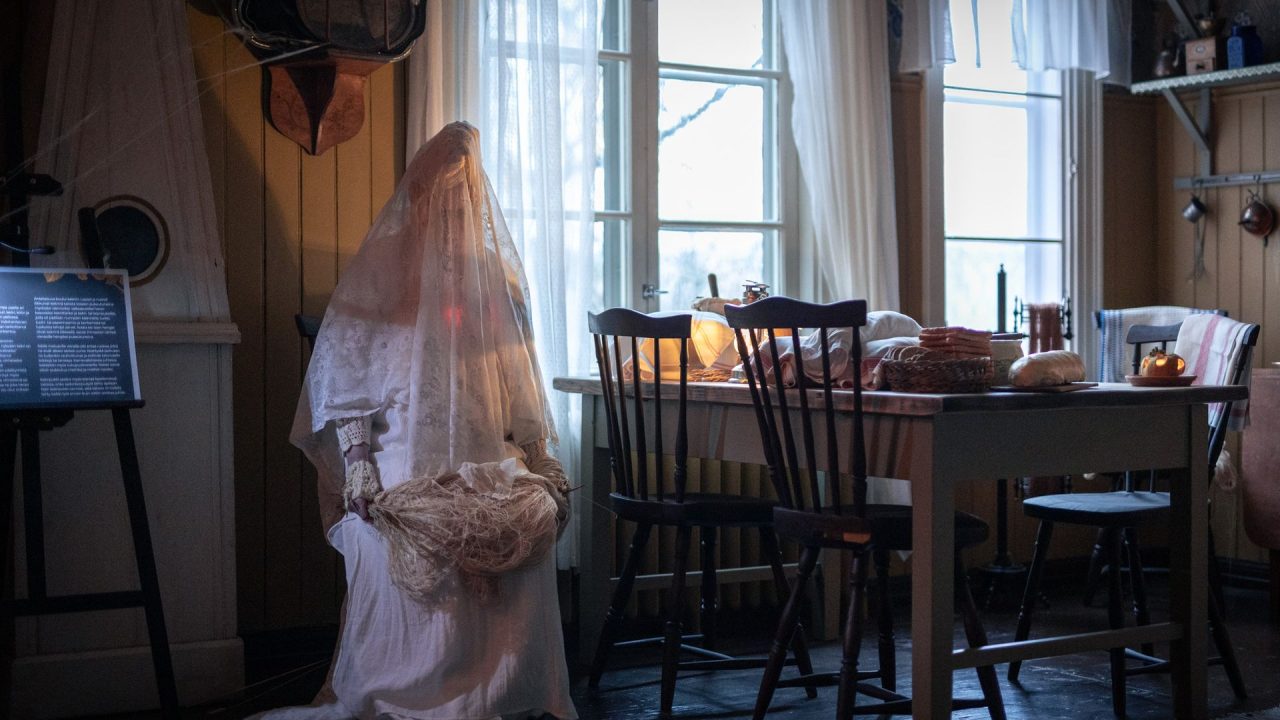
The theme for autumn 2026 is light and darkness. The exhibition leads visitors into the twilight world of the time of Kekri. Darkness conceals old beliefs, memories of spirits, and fears, while light brings with it a sense of safety and hope. How were darkness and light perceived during the time of Kekri?
Palander House, Linnankatu 16. Self-guided activities for the whole family during the museum’s opening hours. The theme of the 2026 Kekri season is Darkness and Light.
Palander House, Linnankatu 16, Hämeenlinna. An annual and popular autumn event celebrating Kekri. The recommended age limit is 12+, as some parts of the event may be exciting or frightening.