
Kotikaupunkilainen


The pre-primary year lays the foundation for lifelong learning
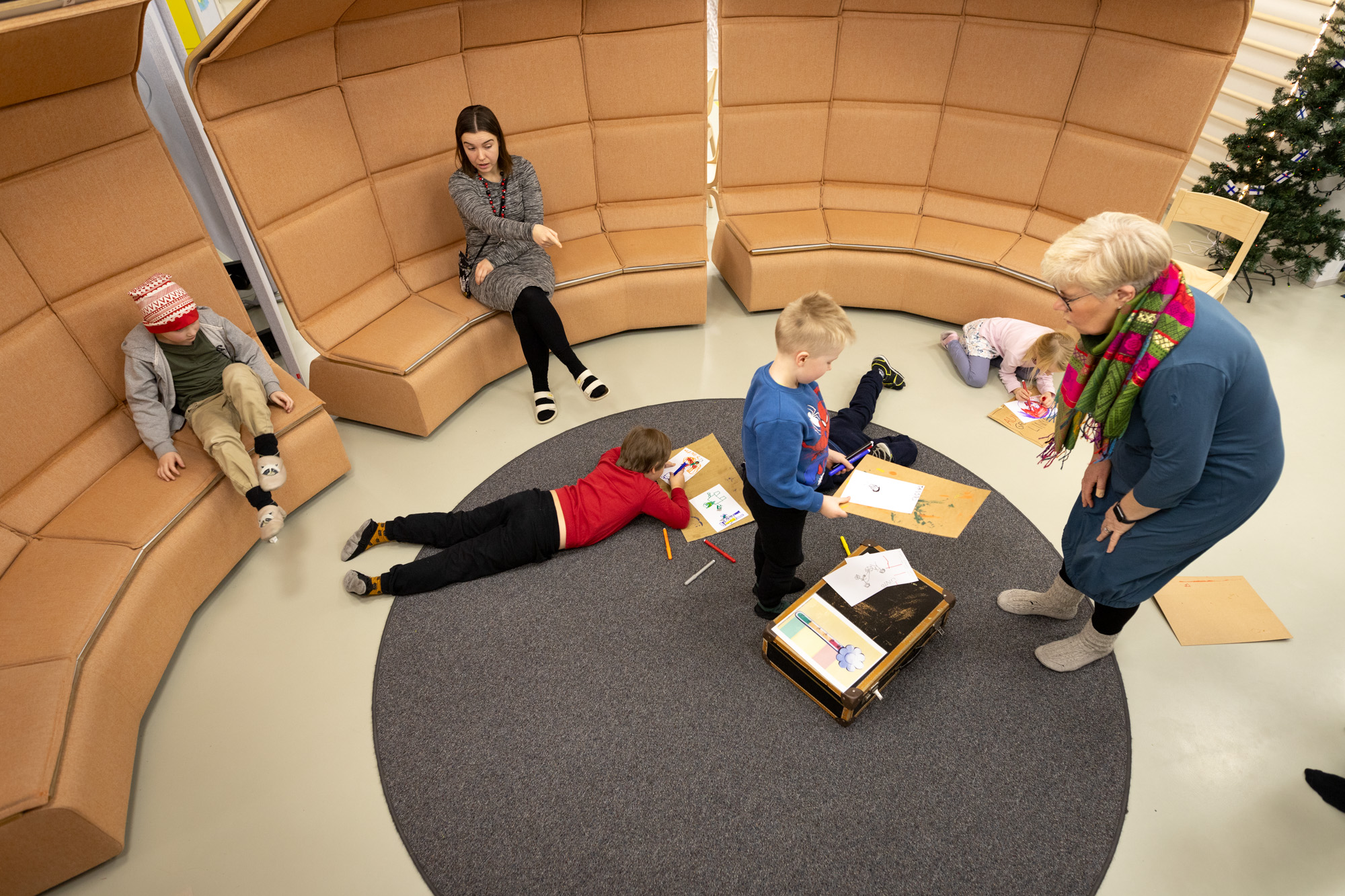
The pre-primary year is a significant period in a child’s life. During this time, the child practises interaction and social skills in many ways, learns important everyday skills, and experiences the joy of learning together with peers. Child-centred activities in a safe environment strengthen a positive self-image and the child’s understanding of themselves as a learner. These skills and experiences create a strong foundation for the school years ahead.
Although pre-primary education introduces children to letters and numbers, for example, Hämeenlinna early childhood education teachers Susanna Keskinen and Tiina Virtanen emphasise that the key goal of pre-primary education is to strengthen a positive self-image in relation to other people and to learning.
When a child has a good foundation – a sense of security, the ability to be part of a group, and a positive self-image – it becomes easy for them to take an interest in, for example, learning to read or strengthening mathematical skills within their peer group,
Virtanen sums up.
Building confidence and self-image
In pre-primary education, children have the opportunity to get to know themselves, reflect on their own strengths and the skills they need to practise. Susanna Keskinen emphasises that every child is good at different things, and this diversity is seen as a resource. “For one child, the basics of reading may come easily, while another shines at, say, building things. Each child practises the skills they need and, at the same time, learns to value their own abilities and those of others,” she explains. Understanding this strengthens the child’s self-image as a learner and helps them accept diversity.
Friendship skills and community spirit at the centre
The pre-primary year gives children the chance to deepen friendships and practise working in a group with peers of the same age. Virtanen explains that within a group, children learn to compromise, take turns, and negotiate – which already requires a great deal from a child. Children also learn the meaning of shared rules. All of this strengthens the group’s sense of safety and belonging. It’s also easier to start the school journey alongside familiar pre-primary friends.
Learning through play and activities
The pre-primary year is full of small and large learning moments, where play serves as a bridge to the most important skills in life. Play is a key method in pre-primary education, as it is a natural way for children to act and learn. Through play, children process things related to themselves and the events they experience. At the same time, children process their emotions and practise interaction skills, self-regulation, and problem-solving. Keskinen points out that the adult’s role is important in enriching play and offering solutions in situations where children may find it challenging, for example, to reach a compromise.
Keskinen and Virtanen emphasise that children become enthusiastic about learning when the topics covered interest them or matter to them. In pre-primary education, activities are built around the interests of the children in the group. This year, for example, one group became fascinated with octopuses: the children looked for information about them, discussed what they had learned, and made their learning concrete by using yarn to measure the length of the largest octopus in relation to their own surroundings. In pre-primary education, children also practise calming down, concentration, and emotional skills through playful and activity-based methods.
Support for the whole family
Pre-primary education strengthens educational equality, as any need for support can be identified early and support can continue at school as needed. Virtanen also highlights the prevention of social exclusion:
In pre-primary education, children practise important life skills, and issues such as bullying are addressed.
From the perspective of preventing social exclusion, it is important that every child feels they belong, that they are part of a community that is meaningful to them. In a safe growth community, children get to practise the skills they will need in the future, learn to value equality and their own uniqueness, and grow into future schoolchildren.
Photo from Tuomela pre-primary’s emotional education training in 2023.