
Orthodox Church
The Hämeenlinna Kumppanuustalo building originally served as an Orthodox church.
Establishment of the Russian Garrison Church
The site of the current Kumppanuustalo was first designated for the use of the Orthodox Church as early as the 1872 local detailed plan. However, local opposition to the church was already smouldering at that time: in the following plan, an attempt was made to quietly change the church area into a park. The Imperial Senate of Finland did not, however, approve the removal of the church from the plan in 1887, and construction work finally began at the end of the 1890s.
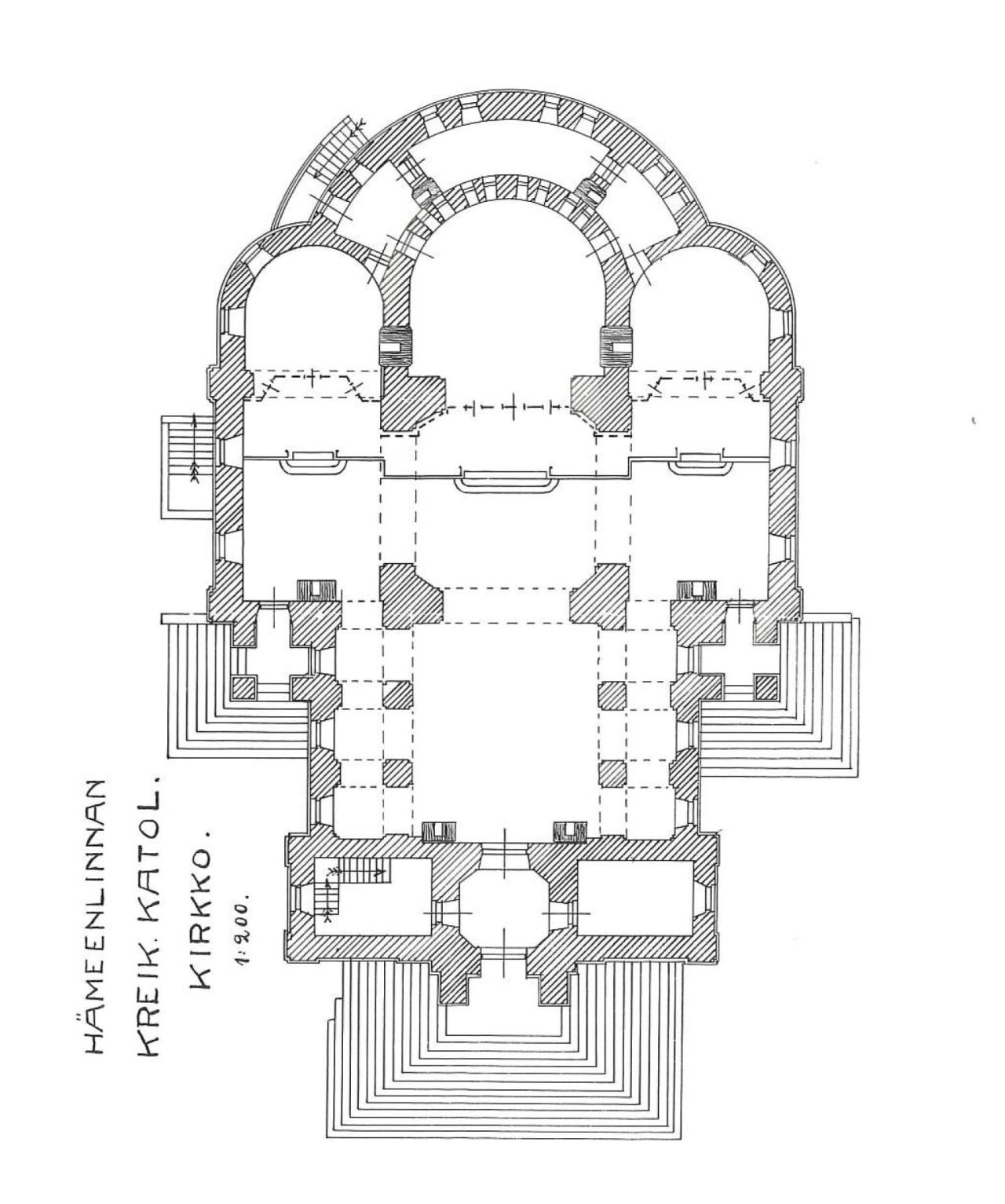
There is conflicting information regarding the church’s architect. Some sources name the Russian Engineer Colonel Karaulszikov as the designer, while others name Second Captain N.A. Schulz. Funding for the church was received from the Russian state, from a fund intended for military buildings, and the church was, at least initially, only in military use.
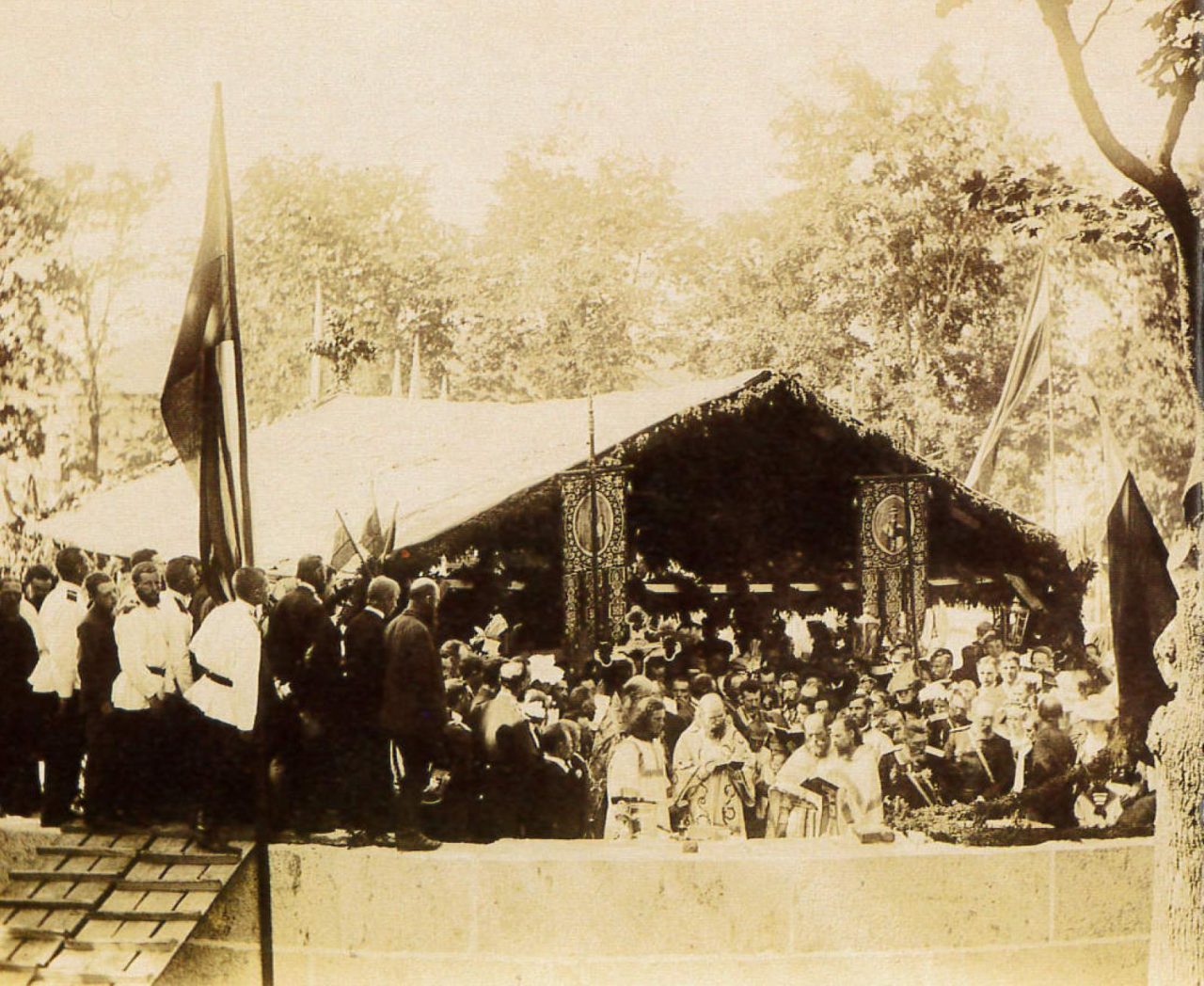
The foundation stone of the church was blessed in the Orthodox tradition in the autumn of 1898. Archbishop Antoni of Vyborg arrived to perform the ceremony. Two years later, on 22 October 1900, the church was consecrated and dedicated to Saint Alexander Nevsky. The new, more political Archbishop Nikolai, elected in 1899, performed the consecration. It is also significant that Governor-General Bobrikov reportedly attended the event, and his presence reinforced the negative attitude towards the Russian church and branded the church as a symbol of the era of oppression.
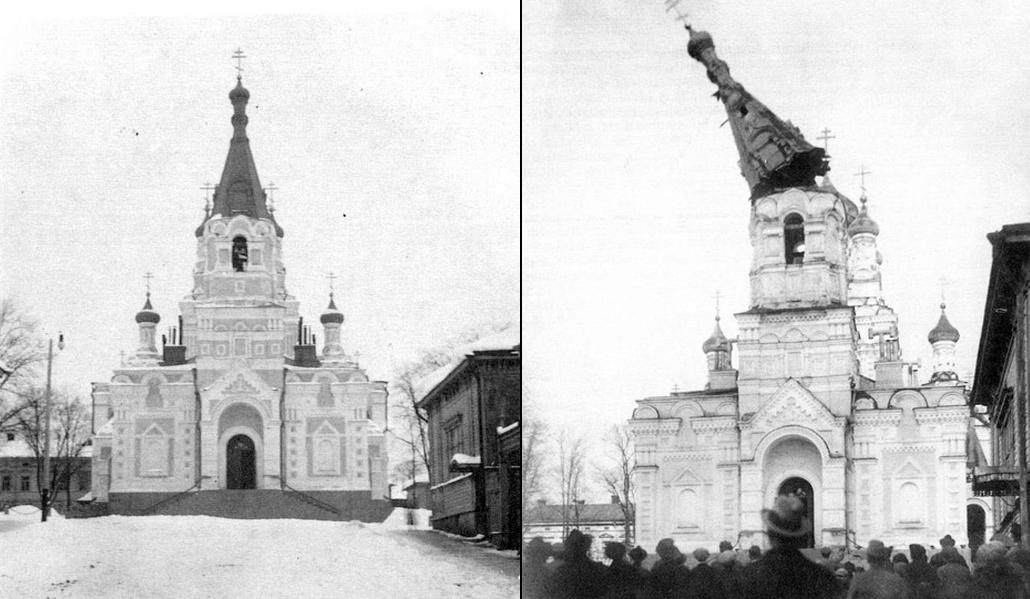
The visibility of the church’s location certainly did not help the opposition against it. The new Orthodox church blocked the view of the Evangelical Lutheran main church and was the first sight of Hämeenlinna for travellers arriving in the city along what is now Turuntie.
The fate of the church after independence
With Finland’s independence, the Russian troops departed in 1918, and the church passed into the ownership of the Finnish state. However, no one immediately took responsibility for the maintenance and future of the building. After the Russian troops left, the church was left at the mercy of vandalism and the elements. Ernesti Suolahti recalls the time as follows:
“In 1918, the Russian military left the country and so the church was left without care. The windows were smashed, the doors were broken open, and the winter winds and blizzards caused destruction in the once beautiful temple. But to whom did the church belong now that the military had left? That was the question that preoccupied the people of Hämeenlinna. The state had indeed taken charge of all the property left here by the Russians, but the land on which the church was built belonged to the city.”
In public debate, the fate of the church seemed clear: as a symbol of Russian oppression, “the Russian church” should be destroyed. Not even the Orthodox Parish of Hämeenlinna suggested, at least publicly, that the church be handed over to the parish to continue as an Orthodox church.
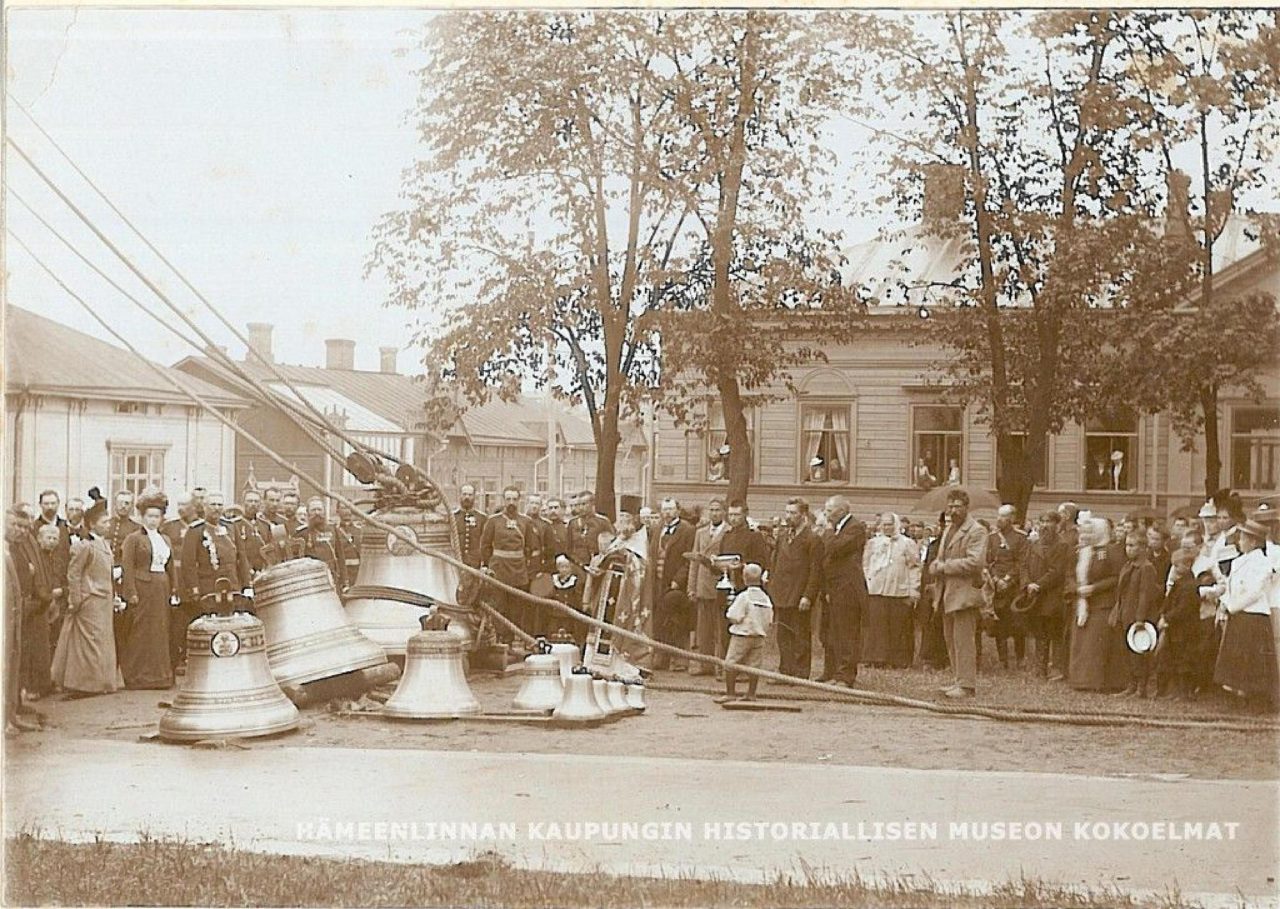
The Hämeenlinna City Council took action to have the church transferred from the state to the city in 1921. The space was considered ideal for a new Library, as the old library had become too small. The Government subsequently handed over the church, including its fixtures and plantings, to the city free of charge on 13 November 1922. Ecclesiastical objects were ordered to be handed over to the museum in Suomenlinna. The church bells were ordered to be kept by the city, and some eventually ended up being donated to the Lutheran parishes in Vesilahti and Tyrvää, or sold to Åland.
When the church towers were finally demolished on 2 May 1923, a large crowd of Hämeenlinna residents gathered to watch the demolition work.
Sources and images
Former library building / Orthodox military church (Kirjastokatu 1). Hämeenlinna Lydia.
The church bells of the Hämeenlinna Orthodox military church lowered down. Hämeenlinna Lydia.
Koskimies, Y.S. 1966. History of the City of Hämeenlinna: Part IV. Karisto: Hämeenlinna.
Laitila, Inka-Maria. 1993. From a Greek Catholic church to a “former Russian military church”. In Orthodoxy in Hämeenlinna, ed. Hämeenlinna City Historical Museum. Hämeenlinna. pp. 32–40.
Laitila, Inka-Maria. 1993. A new faith arrives in the city. In Orthodoxy in Hämeenlinna, ed. Hämeenlinna City Historical Museum. Hämeenlinna. pp. 8–19.