
Swimming and pool water quality supervision
Hämeenlinna Health Protection monitors the water quality of 24 beaches in the Hämeenlinna and Hattula area. There are also swimming sites in the area that are not subject to official monitoring.
Of the monitored beaches, 7 are public beaches and 17 are small public beaches. Public beaches are those with a significant attendance.
Latest swimming water sample results
The latest sampling results for 2026 can be viewed in the sampling table (in Finnish). Results are updated in the table during the swimming season. Results can also be found in the electronic map service (in Finnish).
Swimming water samples were taken from all public and small public beaches in Hämeenlinna and Hattula during week 32. Based on the completed sample results, the swimming water is microbiologically suitable for swimming. No further scheduled swimming water samples will be taken this swimming season.
During week 33, abundant cyanobacteria were observed at Pappilanaro beach, and cyanobacteria warnings were posted at the beach. During the previous week 32, abundant cyanobacteria were observed at Herniäinen and Pappilaniemi beaches on Lake Vanajavesi in Hattula, and minor observations were made at Eerola beach on Lake Vanajavesi. In Hämeenlinna, abundant cyanobacteria blooms were present at Matkolammi, Vanajavesi swimming hall, and Äimäjärvi sports field beaches. Minor observations during week 32 were made at Tervaniemi on Lake Alajärvi, Pappilanaro on Lake Hauhonselkä, Untula and Sankola on Lake Ormajärvi, Kirkkoranta on Lake Suolijärvi, and Sairio on Lake Vanajavesi.
Cyanobacteria warnings have been posted at beaches where abundant cyanobacteria have been observed. The cyanobacteria situation is being monitored intensively at beaches where minor amounts of cyanobacteria have been observed.
Swimmers should always visually assess the condition of the swimming water before bathing. The occurrence and duration of blooms, i.e., cyanobacteria occurrences, are difficult to predict. Winds and currents move cyanobacteria masses, so the amount of cyanobacteria in the water can vary rapidly, even within the same day. Warm and calm weather, as well as nutrients, promote the growth and occurrence of cyanobacteria. Frequently asked questions and answers about cyanobacteria can be read on the Vesi.fi website (in Finnish).
Swimming water monitoring
Beaches in Hämeenlinna and Hattula are monitored in accordance with the City of Hämeenlinna’s environmental health monitoring plan during the swimming season from 15 June to 31 August:
- Three water samples are taken from public beaches during the swimming season and one sample before the start of the swimming season. Public beaches are the busiest, with a significant number of visitors. Their water sample results are reported to the EU.
- Three water samples are taken from small public beaches during the swimming season.
- Official Services monitors the cyanobacteria situation intensively when observations of cyanobacteria occurrences are made at a monitored beach. An information notice is delivered to the beach if cyanobacteria are abundant or extremely abundant. The occurrence and duration of blooms, i.e., cyanobacteria occurrences, are difficult to predict.
National cyanobacteria monitoring results can be followed at Häme Centre for Economic Development, Transport and the Environment/Cyanobacteria situation – Järvi-meriwiki (jarviwiki.fi, in Finnish)
The water quality of beaches in Finland and other EU countries can be checked in the European Environment Agency’s map service.
Summer sampling plan
Swimming water sampling table for 2026 (in Finnish) (pdf file).
Swimming water samples are taken at three-week intervals during the swimming season. The results obtained are updated in the pdf table above, which is alphabetized by beach name. Results are also updated in the city’s map service (in Finnish).
Official Services monitors the cyanobacteria situation intensively when observations of cyanobacteria occurrences are made at a monitored beach. An information notice is delivered to the beach if cyanobacteria are abundant or extremely abundant.
The occurrence and duration of blooms, i.e., cyanobacteria occurrences, are difficult to predict.
National cyanobacteria monitoring results can be followed at Häme Centre for Economic Development, Transport and the Environment/Cyanobacteria situation – Järvi-meriwiki (jarviwiki.fi, in Finnish)
The water quality of beaches in Finland and other EU countries can be checked in the European Environment Agency’s map service.
Guidance on interpreting the swimming water sample results table
ok = microbiological quality requirements set for swimming water are met
Water temperature is measured at the sampling point during sampling.
The busiest beaches, which in the health protection authority’s assessment have a significant number of bathers, are public beaches, so-called EU beaches.
Other monitored beaches are small public beaches.
The number of Escherichia coli bacteria and intestinal enterococci colonies is reported per 100 ml.
Cyanobacteria = blue-green algae
Other observations = observations of litter and macroalgae made during sampling and measures taken in cases of cyanobacteria mass occurrences.
| Cyanobacteria amount | Interpretation in laboratory test report | Measures |
| 0 not detected | not detected | No measures |
| 1 minor | detected in minor amounts | Intensified monitoring of cyanobacteria situation |
| 2 abundant | detected in abundant amounts | Warning to bathers and intensified monitoring |
| 3 extremely abundant | detected in extremely abundant amounts | Warning to bathers and intensified monitoring |
Algae situation/Häme Centre for Economic Development, Transport and the Environment (in Finnish)
Algae monitoring = national algae monitoring result
Monitoring at Tervaniemi beach as well as at the Biological Station beach on Lake Pääjärvi and at Retulansaari on Lake Vanajavesi.
Swimming water quality factors
Bacteria
Swimming water quality is defined as good when the water meets the quality requirements set for Escherichia coli bacteria and intestinal enterococci. A high number of these bacteria indicates faecal contamination of the water, which can cause health hazards to bathers. Faecal contamination usually introduces a range of other bacteria, viruses, and protozoa into the swimming water, which can cause illness. Water quality meets the requirements when E. coli is below 1000 MPN/100 ml and enterococci below 400/100 CFU/ml.
Swimmer’s itch
Swimmer’s itch is caused by larvae of the Cercaria ocellata fluke, which cause unbearable itching and papules when they penetrate the skin. The itching usually disappears within a few hours; papules may remain on the skin longer. Swimmer’s itch can be prevented by avoiding swimming in shallow reedy water, showering after swimming, and drying the skin with a rough towel.
Slime algae
Slime algae sometimes occur in eutrophic humus-rich lake waters. They form a slimy, brownish layer on the skin, which may begin to tighten and itch when dry. However, slime algae are non-toxic and showering helps.
Cyanobacteria
Read more about cyanobacteria and their identification on the vesi.fi website: Questions and answers about cyanobacteria | Vesi.fi (in Finnish)
Quality profiles of monitored beaches
Annually updated swimming water profiles have been prepared for public beaches and swimming water classification has been carried out. Swimming water classification was first carried out in 2011.
Ahvenisto Recreation Area
Ahvenisto swimming water profile (pdf)
- swimming water classification 2023: excellent
- swimming water classification 2024: excellent
- swimming water classification 2025: excellent
Herniäinen, Hattula
Herniäinen swimming water profile (pdf)
- swimming water classification 2023: excellent
- swimming water classification 2024: excellent
- swimming water classification 2025: excellent
Kihtersuo
Kihtersuo swimming water profile (pdf)
- swimming water classification 2023: excellent
- swimming water classification 2024: excellent
- swimming water classification 2025: excellent
Pappilanaro
Pappilanaro swimming water profile (pdf)
- swimming water classification 2023: excellent
- swimming water classification 2024: excellent
- swimming water classification 2025: excellent
Sankola
Sankola swimming water profile (pdf)
- swimming water classification 2023: good
- swimming water classification 2024: excellent
- swimming water classification 2025: excellent
Tervaniemi
Tervaniemi swimming water profile (pdf)
- swimming water classification 2023: excellent
- swimming water classification 2024: excellent
- swimming water classification 2025: excellent
Swimming hall beach
Swimming hall beach swimming water profile (pdf)
- swimming water classification 2023: excellent
- swimming water classification 2024: excellent
- swimming water classification 2025: excellent
Beaches in the Hämeenlinna area subject to official monitoring
Public beaches: Ahvenistonjärvi Ahvenisto, Alajärvi Tervaniemi, Aulangonjärvi Kihtersuo, Hauhonselkä Pappilanaro, Ormajärvi Sankola beach, and Vanajavesi swimming hall beach
Small public beaches: Alimmainen, Aulangonjärvi outdoor hut, Kahtoilampi, Kankaistenjärvi, Katumajärvi Idänpää and OTK beach, Matkolammi, Pannujärvi, Ormajärvi Untula beach, Pursunjärvi, Suolijärvi Kirkkoranta, Vanajavesi Sairio beach, and Äimäjärvi sports field beach
In addition to the monitored beaches mentioned above, there are numerous swimming sites that are not monitored.
Beach owner
City of Hämeenlinna, Infrastructure/Maintenance, Suosaarentie 4, 13210 HÄMEENLINNA. Tel. 03 621 2310. You can provide feedback via the electronic feedback system.
The health protection authority is
City of Hämeenlinna, Official Services/environmental health, Wetterhoffinkatu 2, 13100 HÄMEENLINNA. Tel. 03 621 2310, kaupunkirakenne@hameenlinna.fi
Proposals for additions to the beach list can be sent to the email address kaupunkirakenne@hameenlinna.fi.
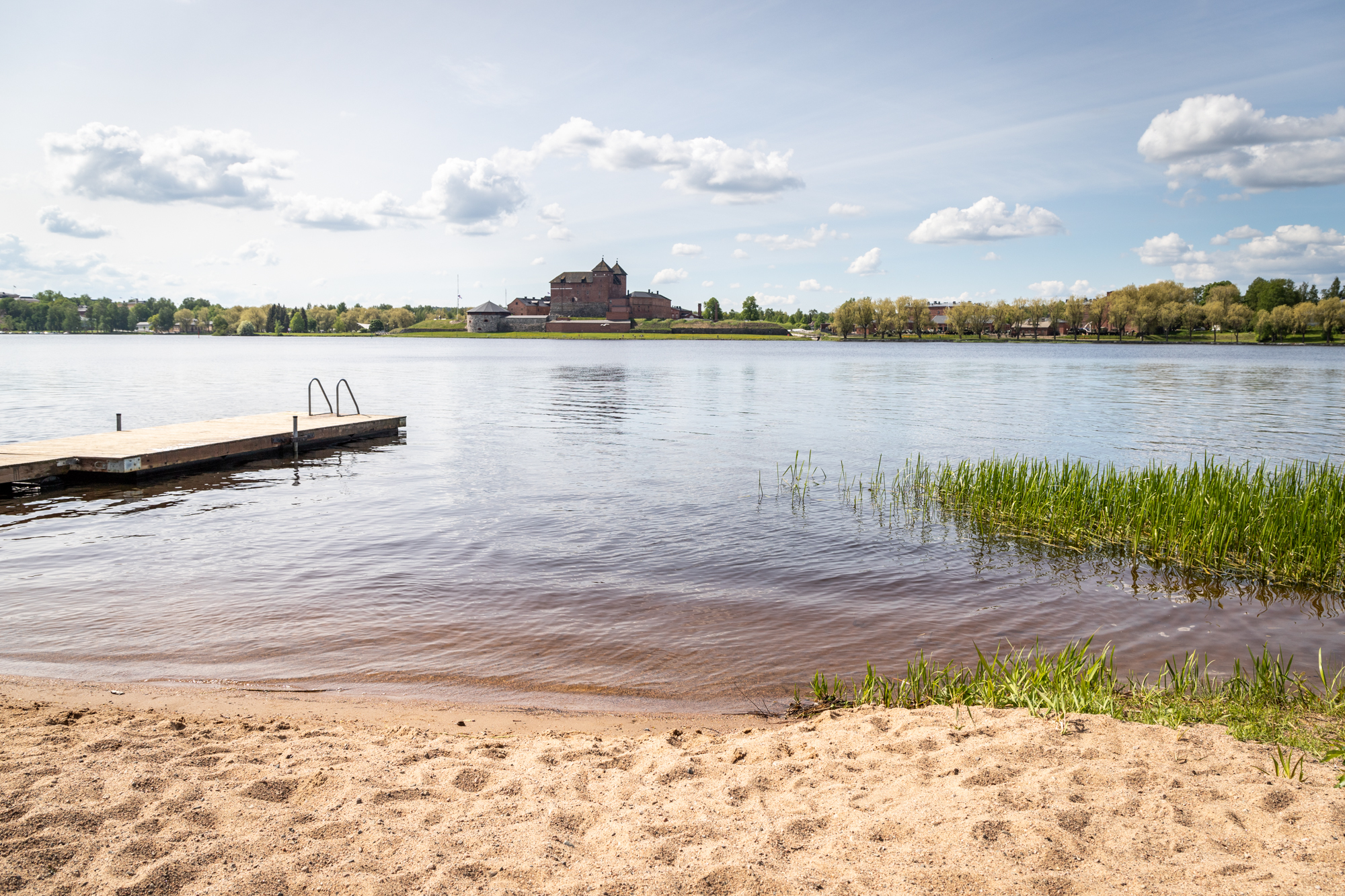
Looking for beaches and swimming sites in Hämeenlinna and Hattula?
Beach cleanliness
Beach cleanliness and swimming water purity are the responsibility of every beach user. Know your responsibility and behave appropriately at the beach. Also advise children and young people to act correctly.
- Dispose of litter in the containers provided.
- Wash a small child’s bottom somewhere other than in the lake.
- Use the toilet.
- Exercise and swim your dog somewhere other than the beach area.
- Do not come to the beach when ill, nor immediately after gastrointestinal symptoms have ended.
- If you notice hazards at the beach, report them to the beach operator.
- Consider other beach users.
- Remember to bring drinking water with you in hot weather.
Pool water monitoring
Health Protection monitors the water quality of public swimming pools. Test results are displayed on the swimming pools’ notice boards. Pool-specific monitoring test programmes have been prepared for monitoring purposes.
Pool water quality requirements
Water quality meets the requirements when the microbiological quality requirements below are met.
- Heterotrophic plate count 22 ± 2 ºC 100 CFU/ml
- Heterotrophic plate count 36 ± 2 ºC 100 CFU/ml
- Pseudomonas aeruginosa not detectable /100 ml
Heterotrophic plate count describes the general bacterial content of pool water, i.e., bacteria that naturally belong to the human environment, such as on the skin and mucous membranes. Heterotrophic plate count does not directly indicate the number of pathogenic bacteria (i.e., pathogens) in the water.
- Heterotrophic plate count 22 °C, i.e., colony count at 22 °C, indicates the general hygiene level of the pool water and the impact of the environment on water quality.
- Heterotrophic plate count 36 °C, i.e., colony count at 36 °C, indicates contamination originating from bathers.
Pseudomonas aeruginosa is a bacterium most commonly found to cause illness via swimming pool water. It can cause gastrointestinal, eye, ear, or respiratory infections.
Physico-chemical variables
Physico-chemical variables mainly describe the effectiveness of water treatment.
- Turbidity 0.4 FTU
- pH value 6.5–7.6
- Combined chlorine 0.4 mg/l
- Free chlorine 0.3 mg/l – 1.2 mg/l (the amount of free chlorine depends on pH value and temperature)
- Nitrate 50 mg/l
- KMnO4 value 10 mg/l
- Urea 0.8 mg/l
- Trihalomethanes (THM) as chloroform 50 µg/l
Limit values have been set so that the microbiological quality of the water remains good and the swimming water is otherwise safe.
Pool water competence
Persons whose work may affect pool water quality must complete a water work card. Read more on the Finnish Supervisory Agency’s pages: Water work card – Finnish Supervisory Agency.
Guide to visiting swimming halls: Come to the swimming hall! guide (in several languages)


