
Invasive species control
Invasive species are organisms that do not originally belong to Finland’s natural environment but have spread there with human assistance, either intentionally or accidentally. In the case of plants, they are often garden escapees. Animals, in turn, have often been deliberately introduced as game species or have arrived in Finland accidentally, for example in the ballast water of ships.
Examples of invasive species include:
- rugosa rose
- hogweed
- Himalayan balsam
- Low junebery
- False Spiraea
- Japanese knotweed
- Reed sweetgrass
- Spanish slug
- Krynickillus melanocephalus
Our invasive species legislation is based on the EU Regulation on invasive alien species (1143/2014) and the Invasive Species Act (1709/2015). Invasive species must not be cultivated, planted, or sown in a manner that allows them to enter the environment. The Invasive Species Act requires property owners to take measures to eradicate or limit the spread of harmful invasive species on their property if the occurrence may cause significant harm to biodiversity or pose a risk to health or safety.
In Hämeenlinna, education and control work related to invasive species has been carried out for nearly twenty years. The city controls invasive species on its own land, and residents are encouraged to take action on their own property. The city’s work has focused particularly on hogweed and Himalayan balsam. In recent years, Spanish slugs and Krynickillus melanocephalus have also increased in number, and efforts have been made to control them. On city-owned land, garden lupine and reed Sweetgrass are removed and moved annually along the shores of Lake Vanajavesi. Rugosa rose growth on city land in Hämeenlinna have been mapped. Mink and raccoon dogs have been removed through various projects and by volunteers.
Report your observations
You can report your invasive species observations to the National Invasive Species Portal. The portal also provides assistance with identifying invasive species. You can report observations in the Hämeenlinna area to the city through the online feedback system.
Consider these points when disposing of invasive species waste
- Handle invasive species waste primarily on the property where it is generated, or take the waste to a waste station. Hämeenlinna’s Karanoja accepts invasive species packed in, for example, waste bags.
- Do not dump garden or invasive species waste in nature. Dumping garden waste on city land is strictly prohibited.
- Do not allow invasive species seeds, root fragments, or, for example, slug eggs to spread with the waste after control measures.
- If invasive species control requires soil replacement, soil contaminated with root fragments, seeds, or, for example, Spanish slug eggs must be sent for treatment—not reused as-is in earthworks.
- The Invasive Species Portal provides good guidance for home gardeners and volunteer work event participants on how to dispose of invasive species.
Slug waste bins and invasive species bags
The City of Hämeenlinna has sought to assist residents in controlling invasive species by placing slug waste bins and invasive species bags in the urban area.
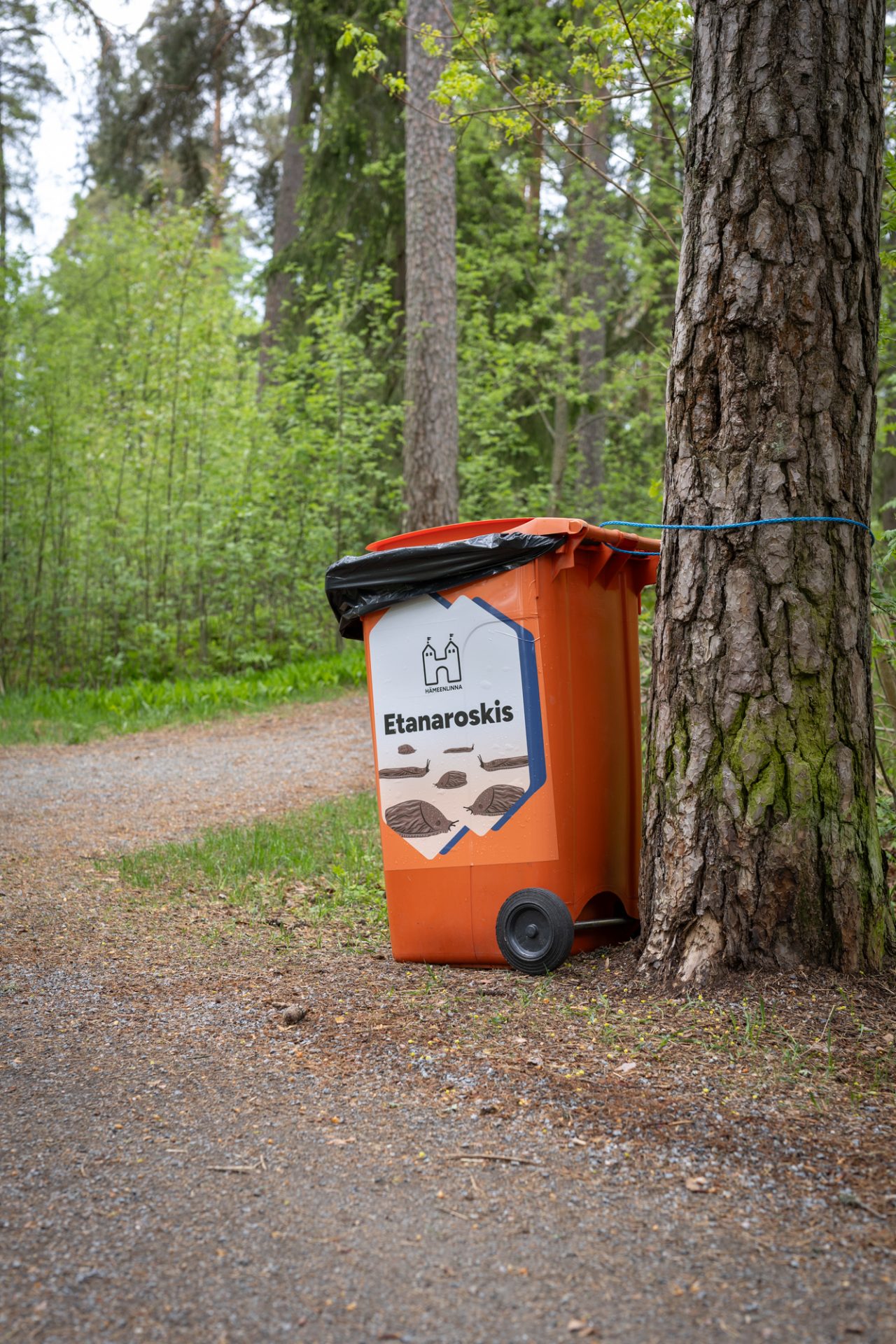
Slug waste bins
Spanish slugs and Krynickillus melanocephalus can be collected in snail waste bins. These bins are available during the summer season and are removed for the winter. The best time to control Spanish slugs and Krynickillus melanocephalus is in the spring, immediately after the snow melts, before the overwintered young slugs have time to lay eggs. Slugs must be dead when placed in the bins and should be euthanized as quickly as possible. Cut the slug’s head longitudinally between the tentacles with scissors to sever the nerve ring, or crush the head with sufficient force, for example with a stone on a hard surface, to ensure the impact is as effective as possible. Slugs can also be euthanized like crayfish by dropping them one by one into boiling water; the water must remain at a rolling boil throughout the process. When handling slugs, it is advisable to use disposable gloves or tools such as grill tongs.
Slug waste bins have been placed in areas where Spanish slugs have been observed.
Invasive species bags
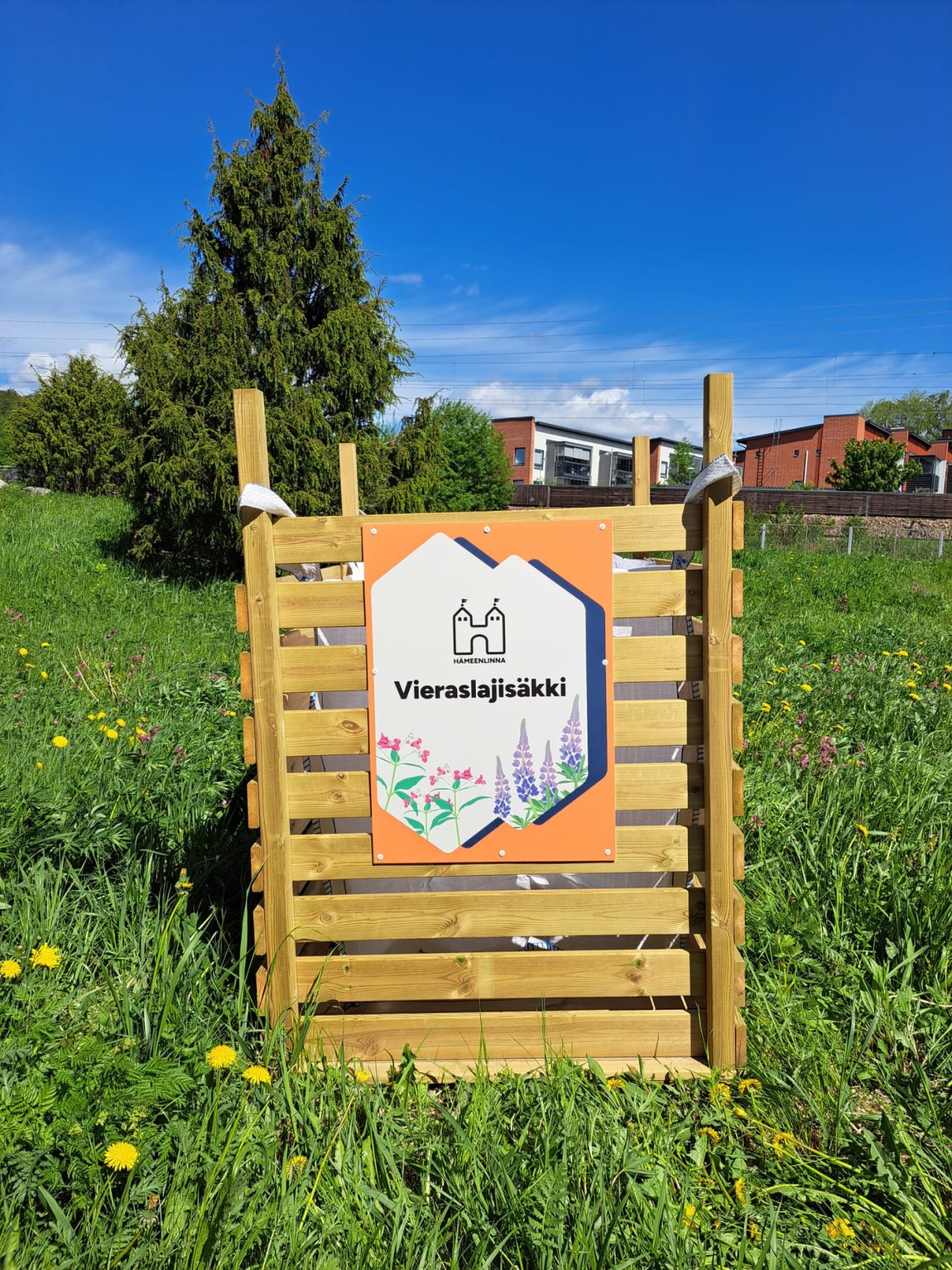
Invasive species bags can be used to collect herbaceous invasive species found on city land, including lupine and Himalayan balsam. The City of Hämeenlinna’s sanitation service handles emptying the bags. Placing waste bags and litter in the bags is prohibited.
Detailed instructions for use and invasive species identification guides can be found on the sides of the invasive species bag stands and slug waste bins.
Upon request, the city can also provide bags for invasive species volunteer work events organized by associations or residents, subject to availability. Report invasive species volunteer work events through the link below.
Background and legislation
Invasive species are regulated by the Act on the Management of Risks Posed by Invasive Alien Species (1709/2015) (the Invasive Species Act)

