
Part 1. Sigfrid Antinpoika raises a toast to Ukko
Numerous natural sites can be found in the area of present-day Hämeenlinna, where people used to gather around a thousand years ago to stay in contact with the spirits of deceased family members and various gods. These sacred groves and hills were called hiisi. Welcome on a literary tour of the hiisi sites in the Hämeenlinna region. Before we set out, let’s set the mood with a visit to 17th-century Hauho.
The illustrations accompanying this article were created using artificial intelligence. Text and AI images: Ossi Nyström
1662 was a bleak year for Sigfrid Antinpoika, who lived in the village of Kokkila. In spring, a severe drought threatened the village’s crops, and in November Sigfrid was accused at the Hauho, Tuulos, and Lammi district court of heresy, sorcery, and the practice of superstitious rites.
According to the charge, Antinpoika had lured his neighbors into acquiring beer and joining him in a pagan act of worship. The idea had been to drink a toast to Ukko by the lakeshore and ask him for rain. Riitta Sigfridintytär, Martti Jaakonpoika, master of the Köykkä cavalry estate, Agneta Fransintytär, the elderly mistress of Perttula farm, Valpuri Martintytär, the elderly mistress of Pulkkila farm, and Maunu Heikinpoika, the elderly master of Mikkola farm, had done as they were told and followed Sigfrid to the lakeshore, tankards tucked under their arms. On the shore, the six of them had knelt in a circle, raised the cup, and prayed, led by Sigfrid:
Holy Ukko, Father of the Sky
servant of God
grant us rain
lest the fair flower wither
and the green grain wilt.

Once everyone had recited the prayer, drunk from the cup, and recited the Lord’s Prayer three more times, Sigfrid had waded alone into the lake. When the water reached his waist, Sigfrid had begun splashing water around him, tipped over the cup, and spoken the rain-words. The group had then set off homeward along a stream. Along the way, they had splashed water on one another, chanting: let it rain like this!
Heikinpoika’s moment of weakness
Sigfrid admitted to the priests who questioned him that the account was, in its main points, essentially true. However, he firmly denied that rain had been requested from Ukko or from any other pagan deity. According to Sigfrid, the prayer had been directed solely and exclusively to the God of Christianity.
The others who had taken part in the ritual at first backed up Sigfrid’s account. Then old, foolish Maunu Heikinpoika’s composure broke under the clergy’s pressure. He blurted out that, in fact, Sigfrid had gone from house to house persuading people to drink specifically to Ukko’s health, and that the prayer on the shore had indeed been addressed to holy Vcko, father of air.
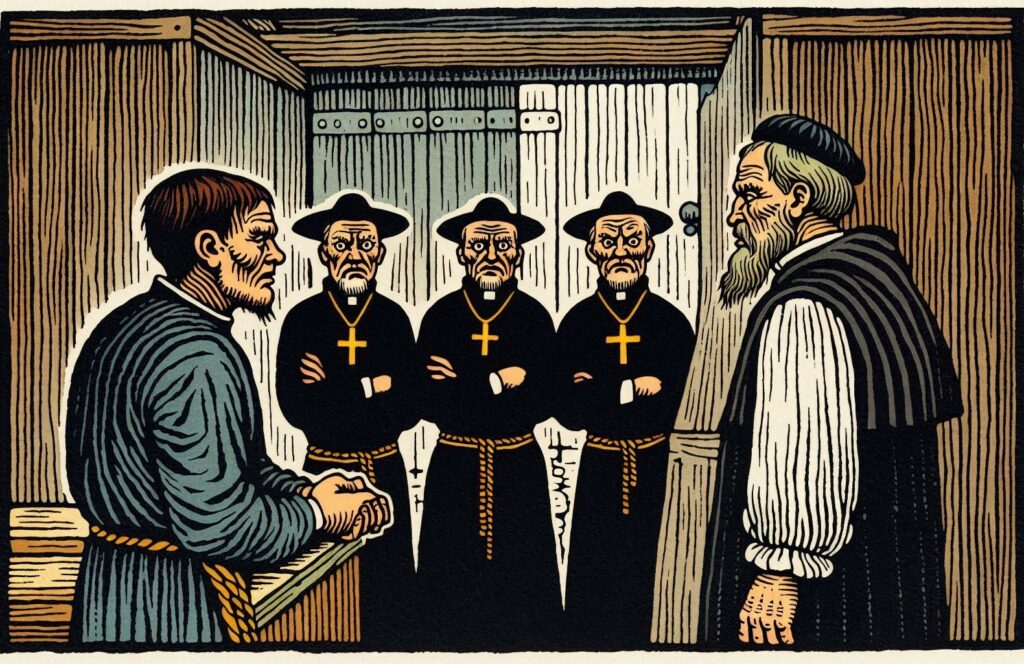
Heikinpoika’s confession confirmed the priests’ suspicions, and soon the others, too, admitted to having acted as Heikinpoika had testified. Sigfrid, however, defended himself by stating that the drought had somehow needed to be brought to an end. The method he had resorted to in that moment of distress had helped their ancestors in the past, and according to Sigfrid, they had never been taken to court for it.
The court records do not specify in detail the shoreline location where Sigfrid Antinpoika and his group performed their rain ritual. It is known, however, that before the arrival of Christianity, and for some time afterward, people gathered at sites consecrated for this purpose in order to commune with various nature deities, spirits, and the souls of the dead. We will explore these natural sites, known as hiisi, in the following parts of this series.
Sources
Melander, K. R.: Muutamia tietoja Ukon ja maanhaltijan palvonnasta meillä entisaikoina, published in Virittäjä 1/1932 (1932)
Miettinen, Tiina; Mäkelä-Alitalo, Anneli: Hauhon historia II (2009)