
Part 6. The mystery of the missing käräjä stones
Today, the word ‘käräjät’ primarily refers to the activities of the judicial system. In prehistoric times—specifically the late Iron Age—the term was understood more broadly. People gathered at the assembly (käräjät) to administer justice and resolve disputes, but it was also an occasion for making decisions on collective matters affecting everyone. For example, Käräjämäki in Renko was likely a site for such gatherings. But where have the assembly stones that were once on the hill disappeared to?
The illustrations in this article were created using artificial intelligence. Text and AI images: Ossi Nyström
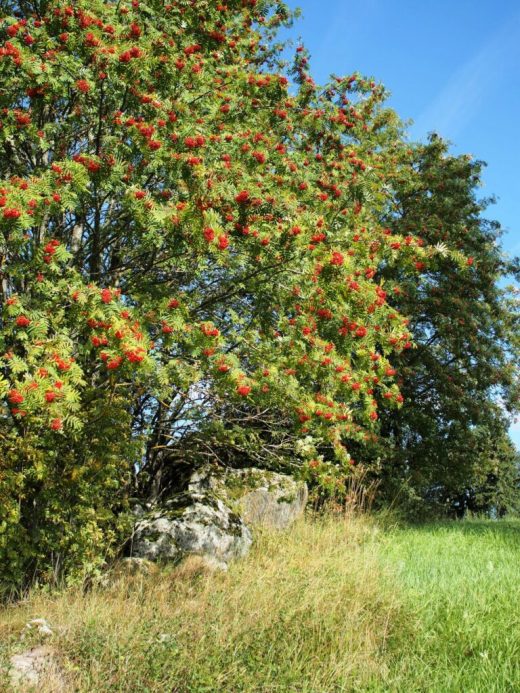
In Lammi, there are two elevations named Linnamäki that are suspected to be Iron Age hillforts. One is part of the Untula esker landscape, while the other is located by Lake Pääjärvi near the biological station. From this latter Linnamäki, it is a one-kilometer journey to Sarapuunmäki in Oitenkylä. Next to Sarapuunmäki lies the Sarapuu field, in the middle of which, hidden within a dense thicket of rowan trees, lurks a boulder the size of a small van known as Ellinkivi.
Today, Ellinkivi lies under a rowan tree without revealing much of itself, but hundreds of years ago, the boulder was the center of the village, visible from every house. Legend has it that a girl named Elli used to meet her boyfriend by the stone. The young couple would sit on the stone on summer evenings and whisper sweet things to each other, until one autumn evening the girl found herself alone. She returned to the stone on subsequent evenings, but in vain. Eventually, she grew tired of waiting and declared that from then on, a will-o’-the-wisp would burn on the stone every Midsummer Eve as a sign of her broken heart.

The Mysterious Sarapuut
It is known that Ellinkivi had a history even before Elli’s tragedy. According to data from the Name Archive, this natural monument, protected since 1964, is a likely sacrificial stone. The potential sacrificial nature of the stone is noteworthy, partly because oral tradition also tells of another sacrificial stone in Lammi located at another site named Sarapuu. This sacrificial stone, located in Syrjäntausta, is called Käräjäkivi (Assembly Stone). Nearby is a sacrificial spring, behind which rises the Sarapuu sacrificial grove.
In past years, attempts were made to link the word ‘Sarapuu’—which means hazel tree in Estonian—to the Estonian god Tarapita. In modern analysis, however, this ‘connection’ has proven to be forced at best, and there is no reason to dwell on it further. More significant is the information that assemblies were always held at the Syrjäntausta Käräjäkivi following sacrificial rites. According to tradition, the flat stone, 80 centimeters high and a few meters wide, could accommodate seven village elders acting as judges at one time.
Assembly site and center of the cult community
Sacred ‘hiisi’ sites were usually located in the most central part of Late Iron Age Tavastian villages. Therefore, they were natural places to gather for events such as assemblies. Additionally, it was likely believed that ancestors should be present when important decisions affecting the entire community were made. The presence of ancestors may also have been believed to encourage disputing parties to remain truthful. A similar belief underlies the practice of swearing on the Bible, which is still observed today.
A judge’s circle is known to have existed on the hill rising next to the Honkaliini sacrificial spring in Lammi. A similar stone circle was also located near Hiilenmäki in Hattelmala. If these sites and Sarapuunmäki in Lammi were ‘hiisi’ sites where assemblies were also held, then Käräjämäki in Renko—known as an ancient border site and currently a popular outdoor recreation area—can similarly be considered an assembly site that was also a ‘hiisi’. Indeed, Jussi Härme mentions in the history of Renko that although no cemetery finds have been made here, it is apparently a cult community center dating back to pagan times.
The Vanished Ring Stones
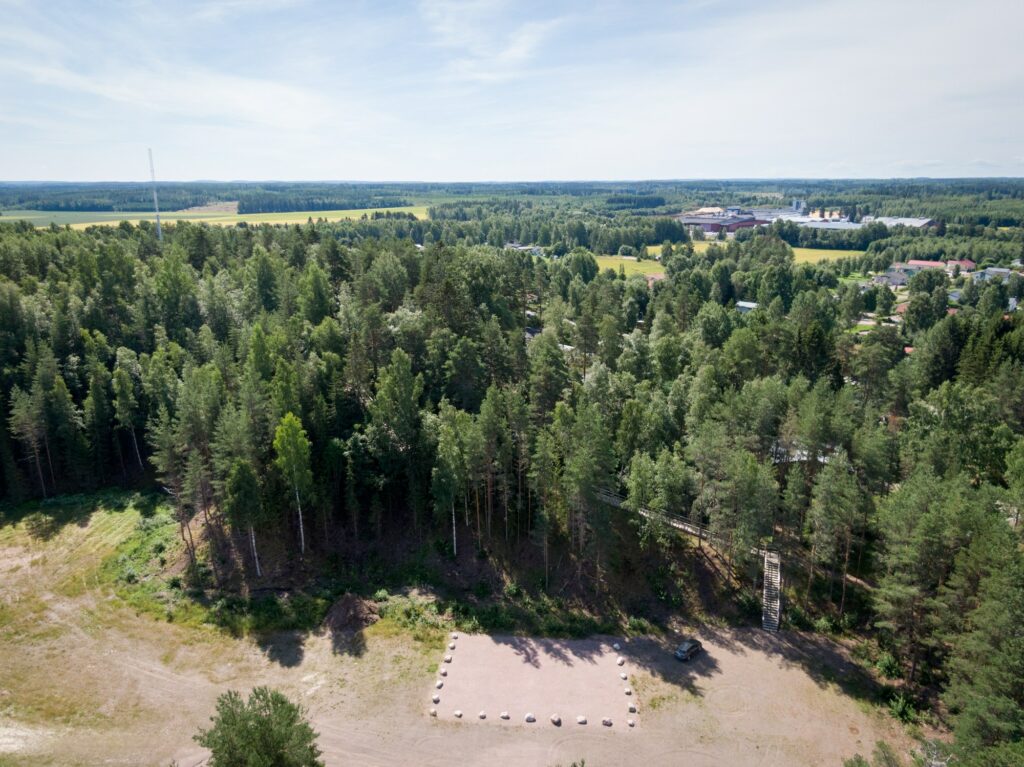
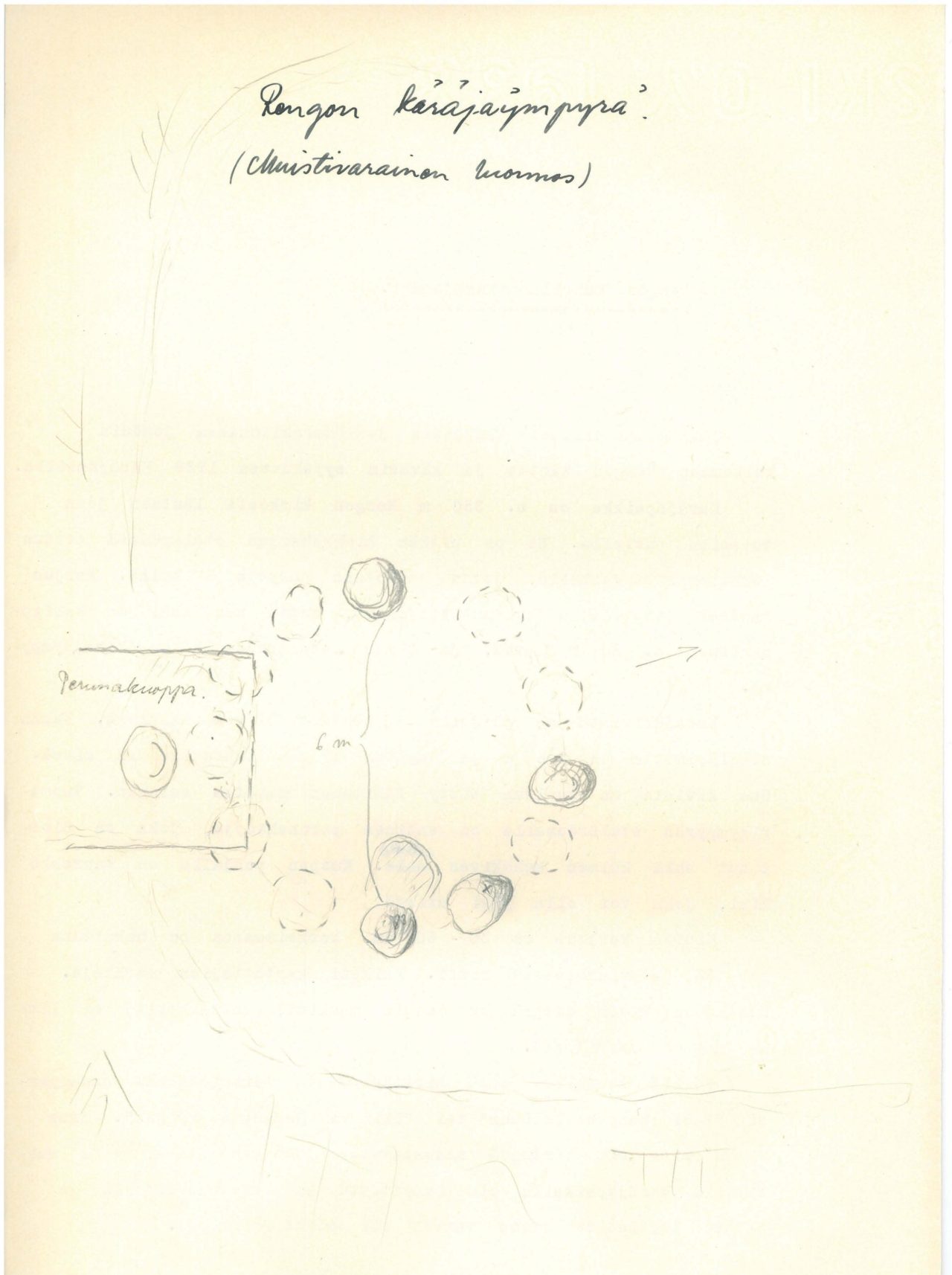
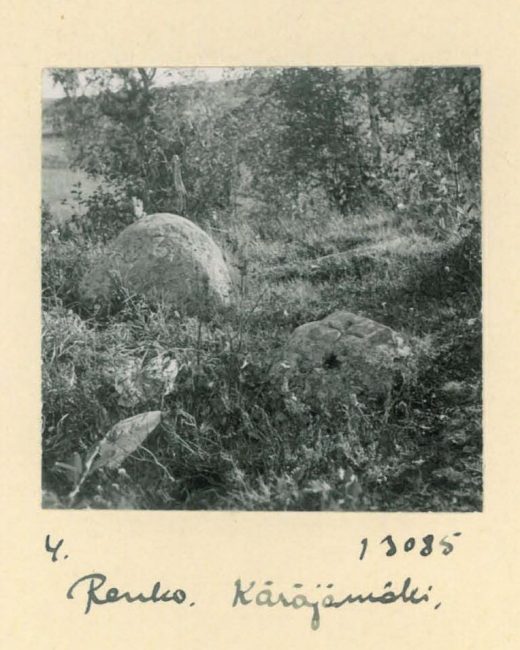
Places named Käräjämäki are often associated with stories of a judge’s circle that once stood on the site, the stones of which were later pilfered for the foundations of a nearby farm’s barn or rolled around the forest simply to pass the time. This is also the case here. However, archaeologist Esko Sarasmo, who inspected the area in 1939, states in his report that he still found four stones arranged in a circle, as well as an old potato cellar which, according to him, extended over the area of three ring stones. According to oral tradition, there were originally seven stones, and they were arranged in a semicircle at the highest point of the hill. Sarasmo, on the other hand, concludes that there would have been twelve stones forming a complete circle.
Today, there is no longer any trace of the stones, but several possible potato cellars can be found on the hill. The last ring stones reportedly disappeared from the hill in the 1960s, when youths who had come to watch the launch of the Sputnik satellite rolled them down the slope out of boredom. It is possible that these stones still lie on the slope or at its base, hidden within the vegetation. If you are inspired to search for them, you should look for stones 30–60 centimeters high, one of which, according to Sarasmo, is engraved with a cross and another with the number 83.
Cemetery or Assembly Ring?
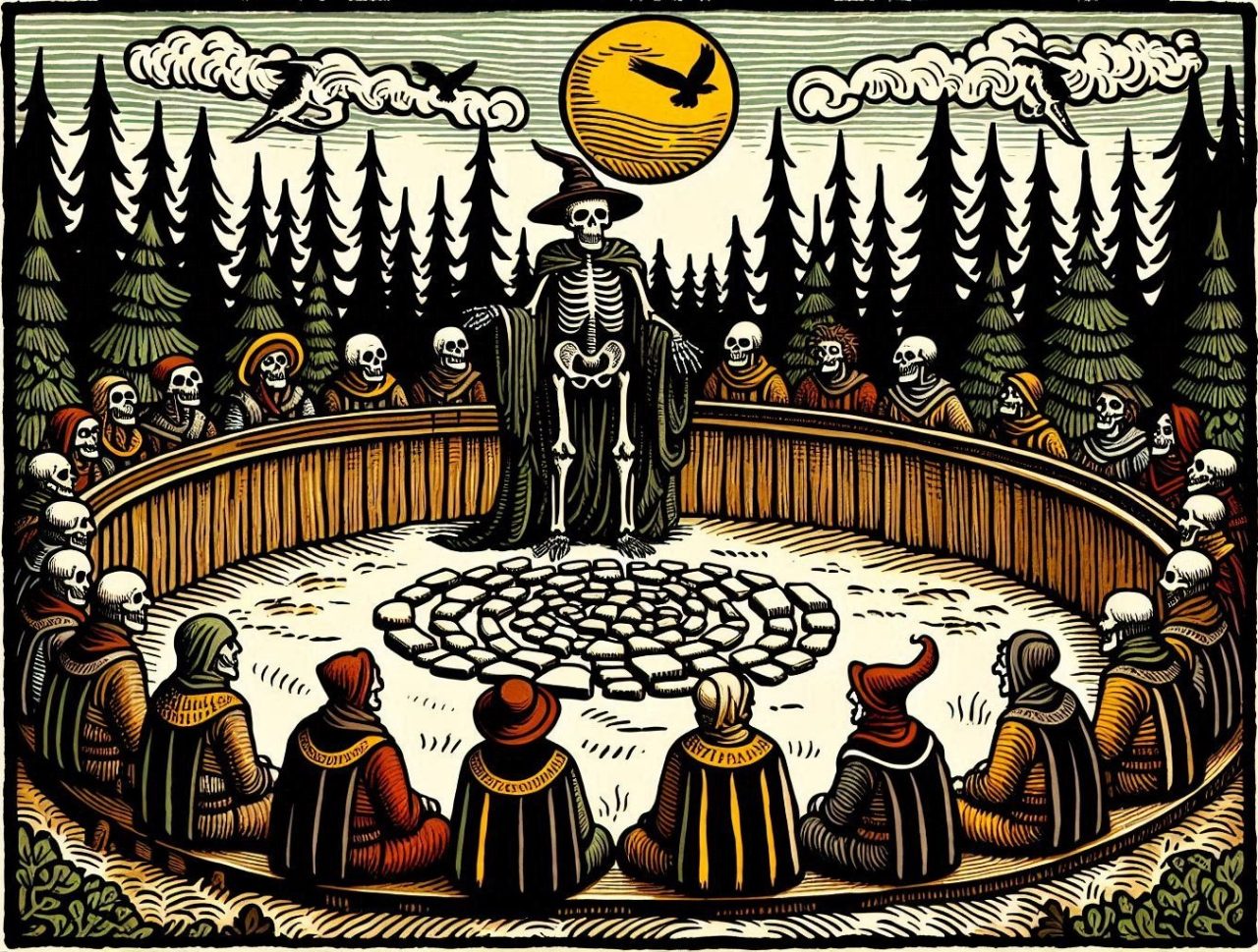
The deceased have been the guardians of morality, the judges of customs, and the maintainers of organized society. In this respect, not even the god of the upper heavens could compete with those who have passed to the underworld.
Uno Harva: The Ancient Beliefs of the Finns
In addition to the disappearance of the stones, the matter of Käräjämäki is obscured by the fact that the circular ancient remains known as judge’s circles were reportedly not originally intended as seats for judges and lay members of the court, but were Iron Age burial structures. The cemetery that Jussi Härme previously sought at Käräjämäki was therefore located at the top of the hill.
It is possible that a place came to be called Käräjämäki (Assembly Hill) simply because people found a stone formation there which they interpreted as a judge’s circle, even though it was actually ‘only’ a cemetery. On the other hand, this does not mean that these cemetery structures could not have been used as assembly stones after all, especially considering that the ancestors buried beneath the stones had their own role in the proceedings.
The ‘authenticity’ of Käräjämäki in Renko is supported by local oral tradition. According to this tradition, the hill also served as a place for the execution of sentences passed on-site. Instead of the condemned, what survived were idioms referring to swinging from the gallows, such as ‘went to the Renko swing’ and ‘borrowed a swing from Renko.’
Sources
Anttonen, Veikko: Uskontotieteen maastot ja kartat (2010)
Haavio, Martti: Taraphita, in the journal Virittäjä 74 no. 2 (1970)
Harva, Uno: Suomalaisten muinaisusko (1941)
Hiekkanen, Markus; Härme, Jussi: Rengon historia (1993)
Ilola, Antti: Rengossa muinoin – Tarua ja totta (2004)
Laakso, Johanna: Taara avita!, in the blog Kieliö – miscellaneous reflections on language and languages (2022) [Taara avita! – Kieliö – miscellaneous reflections on language and languages]
Peippola, Veikko: Kotiseutuni Lammi 1: Kivet kertovat (1990)
Pulkkinen, Risto: Suomalainen kansanusko – Samaaneista saunatonttuihin (2014)
Sarasmo, Esko: Käräjämäki. Käräjäympyrän tarkastus 1939 (1939)
Sarjanto, AP: Outdoor sports facility completed at Käräjämäki in Renko – In the publication Hämeenlinnan kaupunkiuutiset 16.6.2020 (2020)
Service Window for the Cultural Environment: Linnamäki, Hämeenlinna [Service Window for the Cultural Environment (kyppi.fi)]
Service Window for the Cultural Environment: Linnamäki (Biological Station), Hämeenlinna [Service Window for the Cultural Environment (kyppi.fi)]
Digital Name Archive:
Uotila, Eeva: Ellinkivi, Lammi (Kotus, 1965) [Ellinkivi (Kotus, 1965) – Name Archive]
Uotila, Eeva: Ellinkivenpelto, Lammi (Kotus, 1965) [Ellinkivenpelto (Kotus, 1965) – Name Archive]
Uotila, Eeva: Sarapuu, Lammi Syrjäntausta (Kotus, 1965) [Sarapuu (Kotus, 1965) – Name Archive]
Uotila, Eeva: Sarapuu, Lammi Oitenkylä (Kotus, 1965) [Sarapuu (Kotus, 1965) – Name Archive]