
Part 3. The ridge road leads to another reality
In the previous part of the series, we explored Sigfrid Antinpoika’s home region in Hauho. In Hauho, we found a mountain where sacrifices were once made to the Tupsujumalatar goddess. Now, we travel to the legendary Hattelmalanharju ridge to learn about a stone where coins still appear in its cups to this day.
The illustrations in the article were created using AI. Text and AI images: Ossi Nyström
…if you find yourself traveling the Hattelmala ridge road at midnight, your horse will suddenly stop and you will be unable to move forward. If you then happen to peek through the left bit ring, you will see a large treasure sack on the ground ahead… Or if around the same time you happen to look down towards Ketunlukko, which lies between the spring and the ridge road, you might see the glow of hidden treasure fires burning there…
Alma Aarni: On the Sacrificial Springs of Vanaja, Kotiseutu 2/1936
Although Sigfrid Antinpoika’s party and their ancestors raised their toasts specifically to Ukko, there are very few natural sites in the current Hämeenlinna area named directly after him. However, it is possible to uncover Ukko within Hämeenlinna’s place names, albeit through a more indirect route.
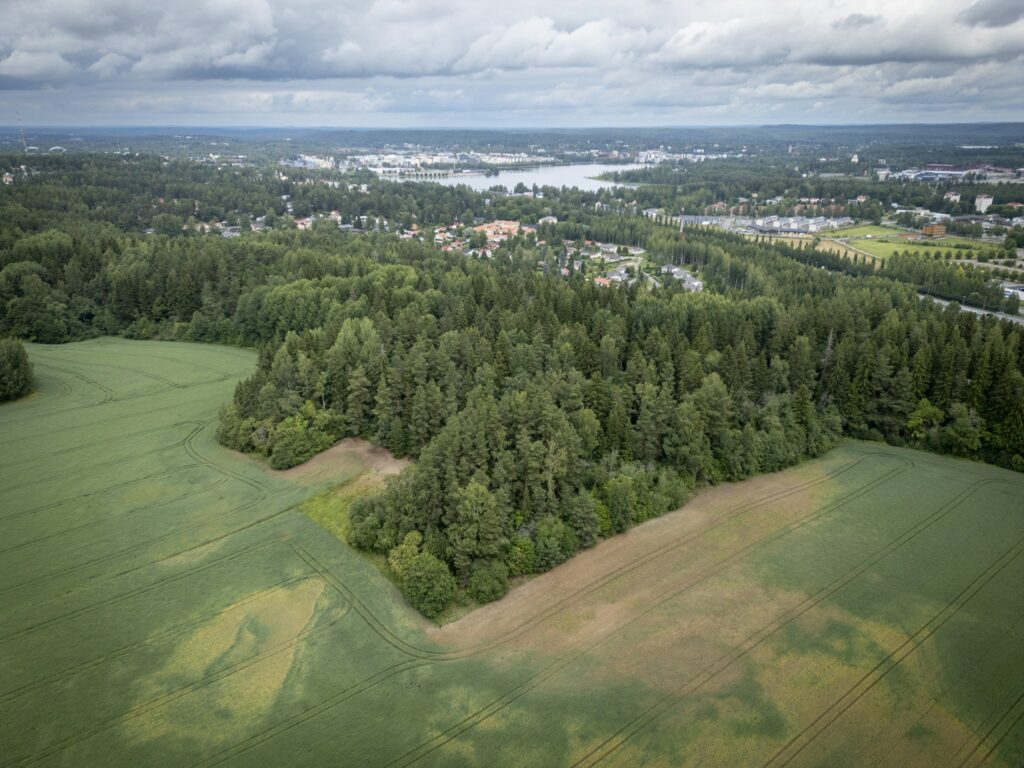
Before taking this detour, it is worth stopping at the Lassila field along Hattelmalantie, where numerous burnt bone fragments and Iron Age pottery shards have been found in the soil. From these finds, it can be inferred that a settlement or burial site existed in the field approximately a thousand years ago.
The sacrificial stone of Hiilimäki
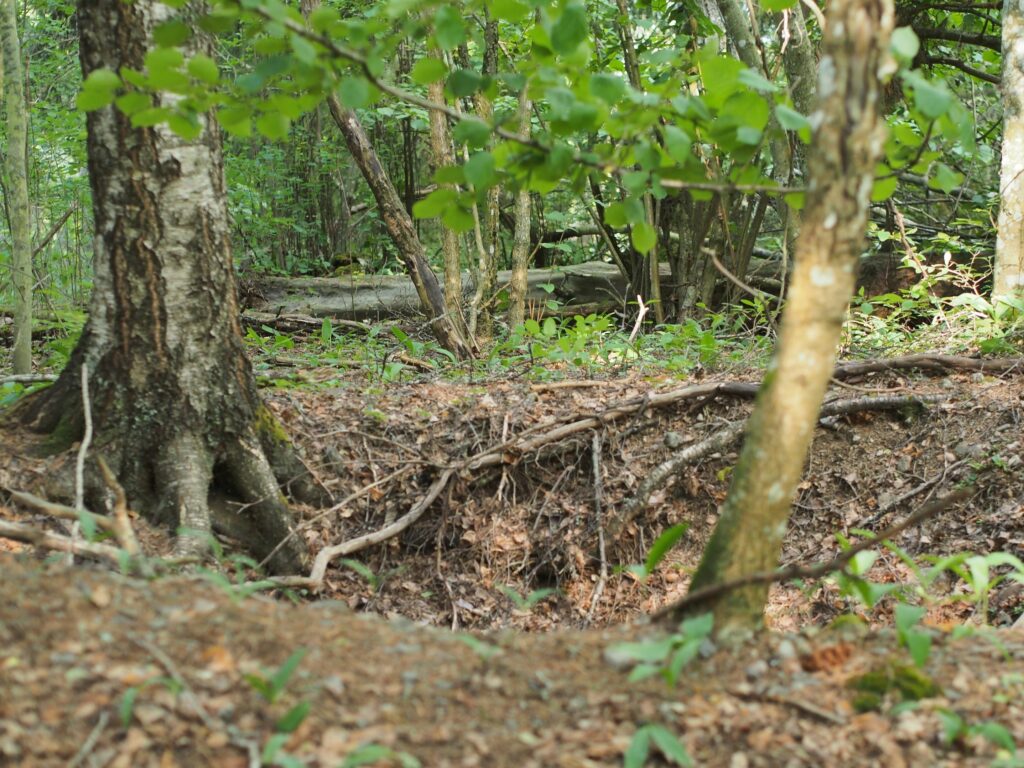
A forested hill named Hiilenmäki, previously known as Hiidenmäki and Hijden kallion alust, extends into the field from Hattelmalantie. The undulating terrain, the aged tree trunks lying here and there, and the new growth pushing from their shadows into the light create an enchanting atmosphere. Here, if anywhere, one could imagine encountering a forest nymph, who, according to information collected from Kankaantaka in the early 20th century, is very beautiful to look at from the front, but from behind resembles a rotting tree stump, a dung fork, or mist and clouds.
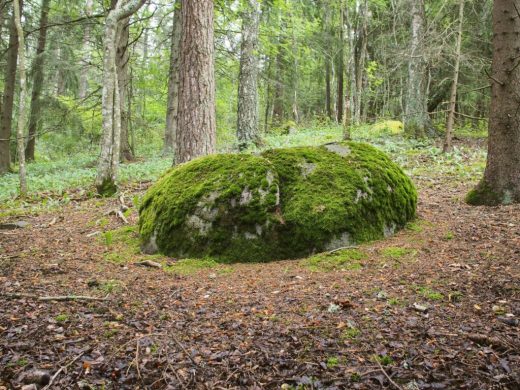
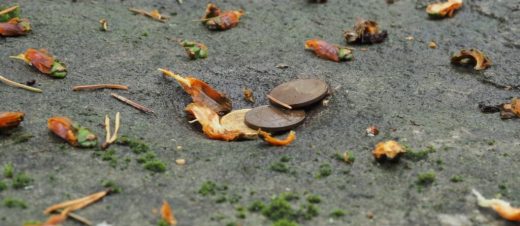
The unique aura of the hill is reinforced by the evenly round pits and trenches dug at its summit, which are suspected to be related to the Polish Uprising of the 19th century. However, branches at Hiilenmäki have been snapping under human feet long before the 1800s. This is evidenced by an Iron Age sacrificial stone found at the edge of the forest in 2012, whose carved cups are like miniature versions of the pits on the hilltop. The coins and pieces of iron lying in the cups show that the practice of making offerings remains active even today.
Cup-marked stones are usually associated with fertility rites, ancestor worship, and healing magic. In the case of Hiilenmäki, the cup-marked stone can be thought of as an altar where offerings were placed for the deceased buried nearby or within the sacred grove itself. It is impossible to know who these deceased were, but it has been suggested that only individuals of particular significance to the community were buried in such sacred sites. Since the Iron Age population living near Hiilenmäki subsisted by farming the land, these could be, for example, the people who originally settled the area and cleared the village fields. These ancestors were believed to continue looking after the fertility of the fields, provided they were cared for in return by giving them a share of the harvest in the form of a sacrificial gift.
The legendary Vankanlähde spring
Not all sacred groves contained a cup-marked stone, but they likely had some kind of core that served as a sacrificial altar, and some may have had several. A large or unusual-looking glacial erratic, a stone cairn, or even a tree, as in the case of Utterinvuori, could have served as an altar.
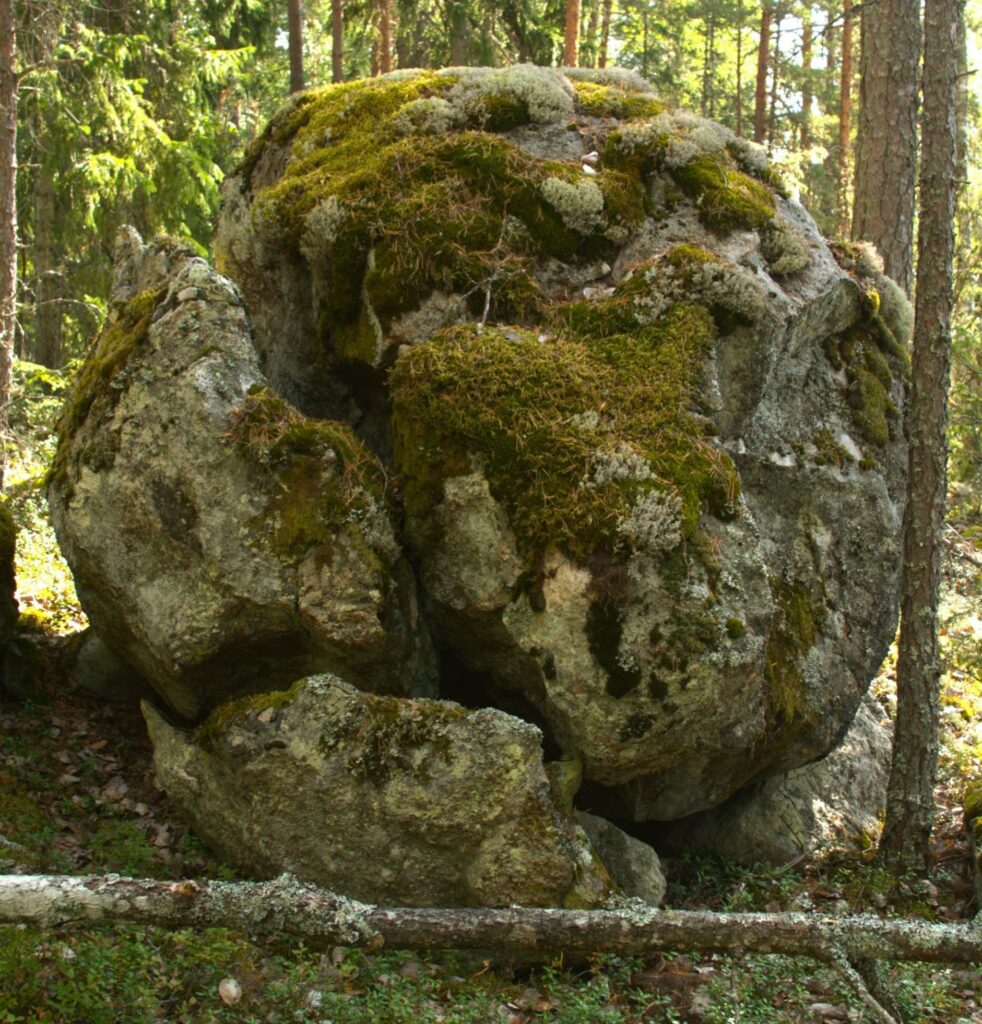
Water—and specifically spring water flowing to the north—may also have played a role in the activities practiced in sacred groves. This is suggested by the fact that a natural spring associated with traditions of sacrifice is very often found at or near ancient sacred sites. In the case of Hiilenmäki, the spring is Vankanlähde, located just over half a kilometer from Hiilenmäki near the University of Applied Sciences campus.
According to oral tradition, people traveled to Vankanlähde from great distances as late as the end of the 19th century to fetch ‘thrush water,’ which was believed to cure oral thrush (a yeast infection) in children. It was customary to throw a coin, a needle, or some other small metal object into the spring as payment. If this offering was not given, the water would not be effective.
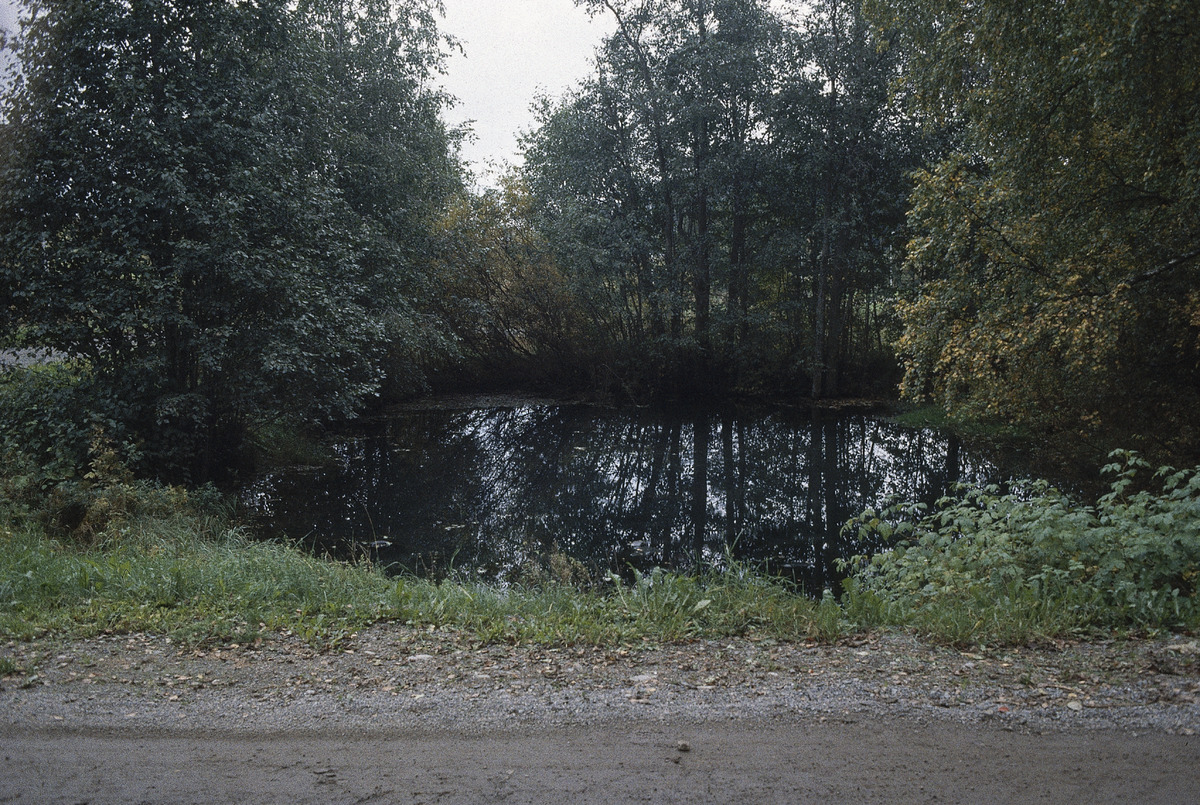
Most of the oral tradition regarding sacrificial springs in the Hämeenlinna area concerns thrush water obtained from the springs. Other beliefs and customs have been associated with the springs, but for one reason or another, the idea of healing thrush water purchased from the guardian of the spring has persisted most strongly.
We can only guess what role the springs played in the ceremonies practiced in Iron Age sacred groves. Perhaps people washed in the crystal-clear water of Vankanlähde before moving to Hiilenmäki? Perhaps the spring water was used to prepare some kind of sacrificial meal? Or perhaps beer was placed in the spring to cool before being enjoyed at the Ukko’s feast held at Hiilenmäki?

The idea of the unique and sacred nature of springs was likely related to the understanding of the spring as an opening leading to the underworld, through which sages knew how to pass. The same principle is repeated, for example, in the cracks of boulders in sacred groves, or in cup-marked stones, which have also been called ‘passageway stones.’ A later example of the same concept can be found in the quote at the beginning of this article, where one peeks through a horse’s bit ring on the Hattelmala ridge road and momentarily sees into another reality.
How to recognize a sacred grove?
Places chosen as sacred groves were often rocky areas that stood out from the rest of the terrain. If the word ‘hiisi’ (sacred grove) or another word referring to ancient Finnish religion appears in the name of such a natural site, it may well be an ancient sacrificial site. The problem, however, is that even those sites named after giant legends are consistently rocky forest areas that stand out from the landscape.
The potential character of a site as a place of sacrifice is supported, for example, by its location near Iron Age settlements and various ancient remains (hillforts, cemeteries, sacrificial springs). However, this condition does not always have to be met, as some sacred groves are known to have been established in the hinterlands of settlements. It is also possible that some places named ‘hiisi’ located far from settlement served only as boundary markers. A rocky place easily distinguished from the terrain was often chosen as a boundary point.
Sources
Aarni, Alma: On the Sacrificial Springs of Vanaja, in Kotiseutu 2/1936 (1936)
Ahlqvist, Arja: To the Afterlife Through the Passageway Stone, in Piela, Ulla; Kauppi, Petja (eds.) Kalevala Society Yearbook 99 – Beyond, Somewhere There. Conceptions of Imagined Worlds (2020)
Björkman, John: Waters at the edge: Sacred springs and spatiality in Southwest Finnish
village landscapes, in Celeste Ray (ed.) Sacred Waters – A Cross-Cultural Compendium of Hallowed Springs and Holy Wells (2020)
Kesäläinen, Tuomas; Kejonen, Aimo: By Sacred Waters (2022)
Pulkkinen, Risto: Finnish Folk Religion – From Shamans to Sauna Elves (2014)
Suvanto, Seppo: The Middle Ages of Vanaja, in Koskimies Y.M. (ed.) History of Vanaja I (1976)
Cultural Environment Service Window: Lassila, Hämeenlinna [Cultural Environment Service Window (kyppi.fi)]
Cultural Environment Service Window: Lassila 2, Hämeenlinna [Cultural Environment Service Window (kyppi.fi)]
SKS KRA. Aarni, Alma KRK 57:73 1913 (Collection of Tradition and Contemporary Culture, Folklore Type Indexes)