
Part 5. From Hiidenhoilo to Kapakanmäki
In the earlier parts of this series, we have seen that the primary purpose of the rituals held at the hiidet was to ensure the fertility of the fields. Next, we travel to Lammi to find out what else went on at these sacred sites. Along the way, we stop for a drink at Kapakanmäki in Tuulos.
The drawings illustrating the article were created using artificial intelligence. Text and AI images: Ossi Nyström
In addition to rain rituals, Sigfrid Antinpoika possessed knowledge of ancient healing methods. This is evident from court records, which mention that he was known in his home region as a healer of ‘pisto’ (stabbing pain) who traveled around the parish to treat the sick.
Sigfrid treated his patients by pouring an ointment made of buck tallow and pig fat onto the affected area. After applying the ointment, he recited the Lord’s Prayer and the following words as many times as needed to reach ten stabs:
Stab, if you stab once, then I shall stab twice…
Stab, if you stab twice, then I shall stab thrice…
His work as a healer eventually led to Sigfrid being accused in court of practicing witchcraft in addition to idolatry.
Sigfrid made house calls, but it is likely that in prehistoric times, sages healed their patients in ‘hiisi’ groves. Such a place may have been Hiidenhoilo in Lammi, which is like a green valley splitting a mountain, with a path running through it.
Who is chanting in the hiisi?
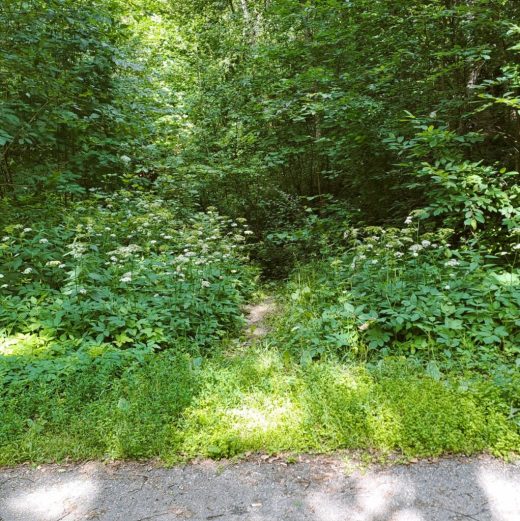
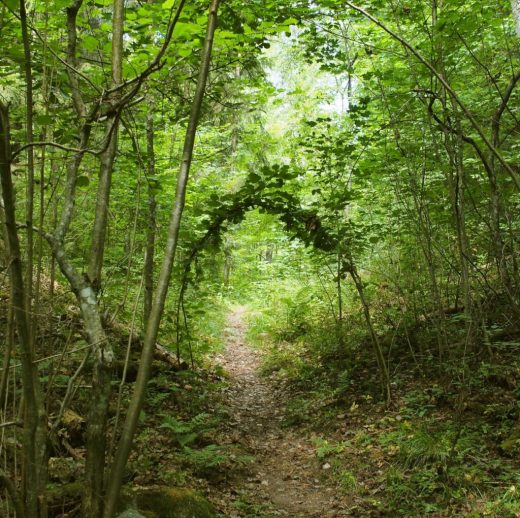
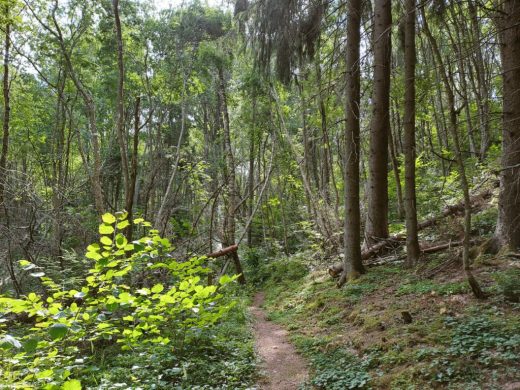
The path starting from the Lovonjärvi rest area serves as the entrance to Hiidenhoilo. As you step through this gate and the hum of the road gradually fades into the rustle of leaves and birdsong, it feels as if you have entered a fairytale world dominated by ferns, where the roots crossing the path seem almost sentient. If you pause here for a moment, you can hear the past centuries quietly chanting somewhere beneath the moss, deep within the earth. In such an environment, haste is a waste of life, but as the journey must inevitably continue, the path leads through Napilanmäki and Patamäki to the Iron Age hillfort of Linnamäki. After Linnamäki, you will find the magnificent Untulanharju nature trail, whose hazel groves hold much that words can hardly capture.
According to legend, Hiidenhoilo got its name from ‘hiisi’ creatures chanting as they drove their cattle along its paths to the shore pastures of Lake Ormajärvi. Only the hiisi knows if this was the same hiisi-herd that, according to another story, sowed chaos and disorder in the borderlands of Hauho. This herd, led by the arch-evil itself, used sacrificial springs as portals to underground passages, through which the bullocks dashed here and there to turn everything upside down.

Anja Virmala, who has written about the history of the Lammi parish, states in her book that the story of hiisi chanting to their cattle clearly refers to pagan-era witches and sages who operated in Hiidenhoilo. The fact that a healer known as Kiviskä lived near Hiidenhoilo as late as the early 1900s is likely a coincidence rather than evidence of a persistent sage tradition spanning centuries. In the memoirs of author Anni Polva, who spent her childhood summers in Lammi, Kiviskä remains an impressive and mysterious figure who wandered the forests and bogs, gathered flowers and mosses, and brewed pungent remedies in a black iron pot.
When I remember her today, she comes to mind as if cut from the Kalevala. It is exactly like her that I imagine our ancient, powerful female sages.
Anni Polva
The mysterious sword-sharpening stone
The location of Hiidenhoilo near Iron Age settlements, a sacrificial spring, and a hillfort suggests that the site was an ancient sacrificial grove, later associated with various folk tales. However, it is peculiar that another sacrificial site shared by a community existed on the other side of Untulanharju. This can be inferred from the Honkaliini sacrificial spring and cemetery located along Evontie, as well as the strange sword-sharpening stone situated a stone’s throw away in the Gammelgård manor area. No certainty has been reached regarding the original purpose of sword-sharpening stones, but they are thought to be related to the working of stone objects and various Iron Age beliefs.
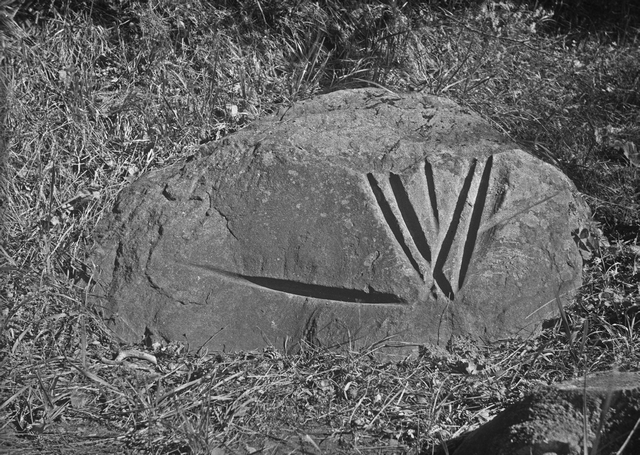
Dozens of bovine teeth have been found near the stone on the shore of Lake Ormajärvi. It is possible that these teeth are somehow related to the activities carried out at the stone in ancient times. Who knows, perhaps the matter also involved a protector of crops named Ormos or Orma, who blew the wind on Tuulensuunmäki hill, and after whom Lake Ormajärvi and the Ormijoki river are said to be named.
Orma is said to have had a boat landing near Pestimäki (now known as Valkamamäki) by the Ormajoki river, a short distance north of the village of Pohjoinen. There, she received the sacrifices brought by boat from Lake Ormajärvi along the river. On Kapokanmäki hill, about ½ verst east of Tuulensuu, she had Kapo, a maker of ale, which was given as a sacrificial drink to wealthy guests.
Place names and local legends 1879–1882: Orma or Ormajoki

No further evidence of Orma’s beer feasts likely exists. However, the idea of people gathering on a hill at a border site to raise ale toasts to a god controlling the weather sounds familiar. Perhaps memories of ancient ‘ukonvakka’ festivals held in the region have, over time, turned into stories of feasts held in honor of a local deity blowing the wind in Tuulos? Be that as it may, people still gather at Kapakanmäki in Tuulos today, and these gatherings are not known to have lacked beer either.
It is difficult to draw definitive conclusions about what truly happened in the past based on folk tales. However, they provide excellent material for various journeys of the imagination. The stories told in this text trace a route on the map that begins at Hiidenhoilo. Perhaps cattle were led through the valley to the grooved stone on the shore of Lake Ormajärvi to be sacrificed. And who knows, perhaps the sacrificial meat was rowed along waterways to Kapakanmäki on the border of Tuulos and Lammi, where the meat was prepared for a sacrificial meal for beer festivals held in honor of the god of weather.
Sources
Aalto, Ilari: Miekka kivessä – Suomen alueen miekanhiontakivien uudelleenarviointi, published in Arx Tavastica 14 (2020)
Kiuru, Uljas: Lammi – Kuvia ja kertomuksia pellavapetäjästä (1989)
Melander, K. R.: Muutamia tietoja Ukon ja maanhaltijan palvonnasta meillä entisaikoina, published in Virittäjä 1/1932 (1932)
Miettinen, Tiina ; Mäkelä-Alitalo, Anneli: Hauhon historia II (2009)
Moilanen, Ulla: Solki ja naudan hampaat – Uhrilöytöjä miekanhiontakiven vierestä? [Solki ja naudan hampaat – Uhrilöytöjä miekanhiontakiven vierestä? – KALMISTOPIIRI]
Place names and local legends 1879–1882: Orma or Ormajoki [PLACE NAMES AND LOCAL LEGENDS 1879–1882 (kotus.fi)]
Polva, Anni: Kun olin pieni (1986)
Qvist: Pakinaa Hauhon haltioista, published in Aamulehti 7.7.1934 (1934)
Ruotsalainen, Pirjo ; Virmala, Anja: Lammin pitäjän historia 1: Ruotsin vallan loppuun (1972)
Digital Name Archive:
Harjula, Taru: Hiidenhoilo, Lammi (Kotus, 1967) [Hiidenhoilo (Kotus, 1967) – Name Archive]
Häppölä, Sinikka, Kapakanmäki, Tuulos (Kotus, 1967) [Kapakanmäki (Kotus, 1967) – Name Archive]
Peippola, Veikko: Hiidenhoilo, Lammi (Kotus, 1982) [Hiidenhoilo (Kotus, 1982) – Name Archive]
Uotila, Eeva: Kapakkamäki, Lammi (Kotus, 1965) [Kapakkamäki (Kotus, 1965) – Name Archive]