
Part 7. From sacred places to hellish hiidet
In the earlier parts of this series, we have seen that many of the most important activities of late Iron Age Häme communities took place at the hiidet. In this final part of the series, we travel via the Häme karsikko trees to the shores of Lake Katumajärvi. There we discover what became of the hiidet when Christianity arrived in Häme.
The illustrations in the article were created using AI. Text and AI images: Ossi Nyström
According to oral tradition, a burial ground was located on Kuuliaistenmäki in Renko. Stories suggest that a nearby sacrificial karsikko (a ritual marking on trees) was also part of the same complex. The stories also tell of a bear that began digging up bodies from the burial ground; for this and likely many other reasons, the bear was ambushed at a location marked on the map as Karhunporras (Bear’s Steps).
In Finnish folklore, a karsikko is a grove or an individual tree where a marking concerning the deceased was made. Because the karsikko marking was usually made while the deceased was being transported to the burial ground or church, the karsikko grove was typically located along the travel route.
If there truly was a burial ground at Kuuliaistenmäki where inhumations were performed instead of cremations, it indicates that the related oral tradition dates back to a time when Christianity had already begun to influence burial practices. However, this was not in the very recent past, as the deceased were buried in the forest rather than in a cemetery.
Sacred trees and bones hanging from branches
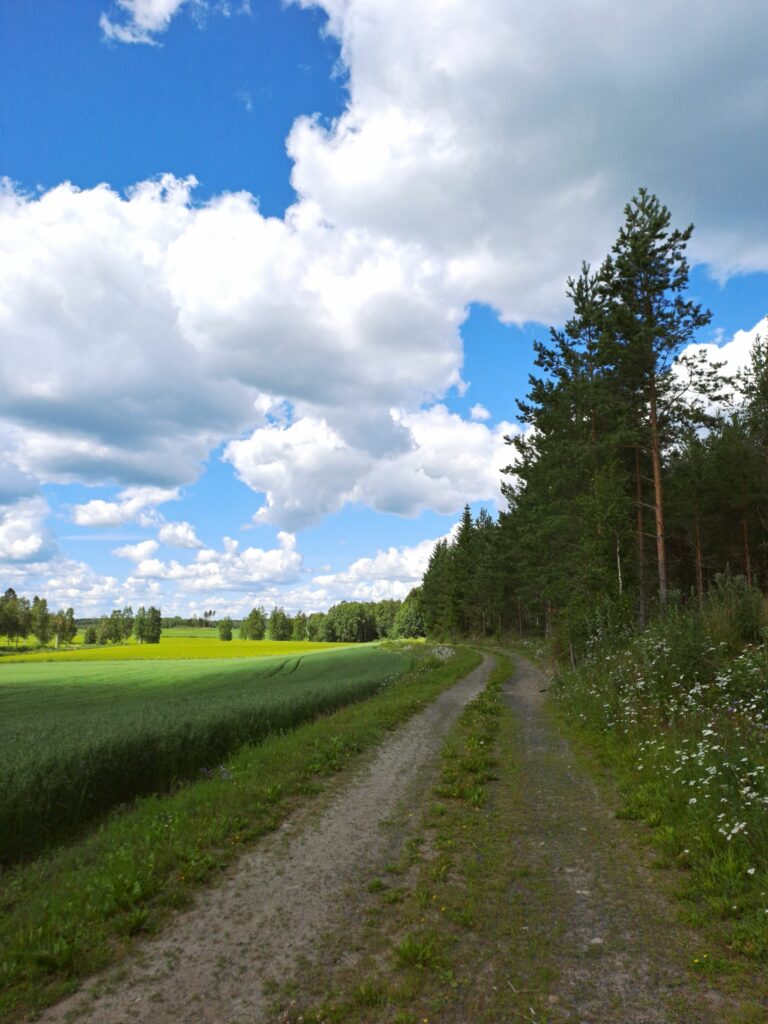
Reports concerning Pyhämäki in Kutila, Kalvola, also speak of a certain intertwining of Christian and ancient Finnish customs. According to these reports, people traveled to Pyhämäki from Helvalankärki on the other side of Lake Äimäjärvi, as the route between these places was short and the water level very low. The story goes that a devil or a troll even tried to build a stone bridge between Helvalankärki and Pyhämäenkärki, but the construction stopped when a rower arrived and shouted: do not block my church path!
But why would the devil have become a bridge builder? Perhaps because that devil’s bridge would have both blocked the church path and led people to Pyhämäki for devilish rituals. According to the stories, people stopped at Pyhämäki to perform sacrifices when the deceased were being transported through it to the church.
It is possible that in this case, too, it was a karsikko where the churchgoers of Kalvola, who had already converted to Christianity, may have had a habit of stopping to look back once more toward their old worldview. Perhaps people thought it was worth seeing the deceased off on their final journey according to old customs as well, just to be safe.

The sacrifice performed could have been, for example, an object attached to a tree, as in the case of the Tupsumänty (Tuft Pine) of Utterinvuori. Alternatively, the sacrifices were animal skins and skulls that, according to the story, were hung from the branches of trees growing on Pyhämäki.
The Rebellion of the Tavastians
It seems that information about the activities at Pyhämäki in Kutila, Kalvola, for some reason never reached the ears of Pope Gregory IX. In 1229, he sent a letter to the Bishop of Finland, implying that the Christianization of the Finns was proceeding very smoothly.
For the sake of your righteous requests, those groves and shrines that were previously designated for pagan worship rituals, but which those recently converted to the faith by your actions have of their own free will given to your church, we confirm as belonging to the church itself by apostolic authority and assure it with the protection of this letter.
Pope Gregory IX 1229
However, a bull written by the same pope less than ten years later tells a completely different story.
For as your letters delivered to us reported, those called the tribe of Tavastians, who previously through your and your predecessors’ work and zeal had converted to the Catholic faith, have now, under the influence of the enemies of the cross living nearby, turned back to the deceitfulness of their old error. With the help of the devil and some barbarians, they are completely destroying the planting of God’s new congregation in Häme. Small children, upon whom the light of Christ dawned in baptism, they violently tear away from this light and kill. Adults, after first tearing out their entrails, they sacrifice to evil spirits, and others they force to run around trees until their life departs. Some priests they blind and, after cruelly mutilating their hands and other members, they set the remaining ones to be burned as food for the fire, wrapped in chaff. Thus, through the cruelty of the pagans, the kingdom of the Swedes itself is falling, as it easily leads to the destruction of the faith, unless it is rushed to be supported by the help of God and the apostolic see.
Pope Gregory IX 1237
The brutal details of the excerpt described above have been interpreted as crusade propaganda. However, it is a fact that not all converts remained converted, and conflicts arose to such an extent that historical accounts speak of the Häme Rebellion.
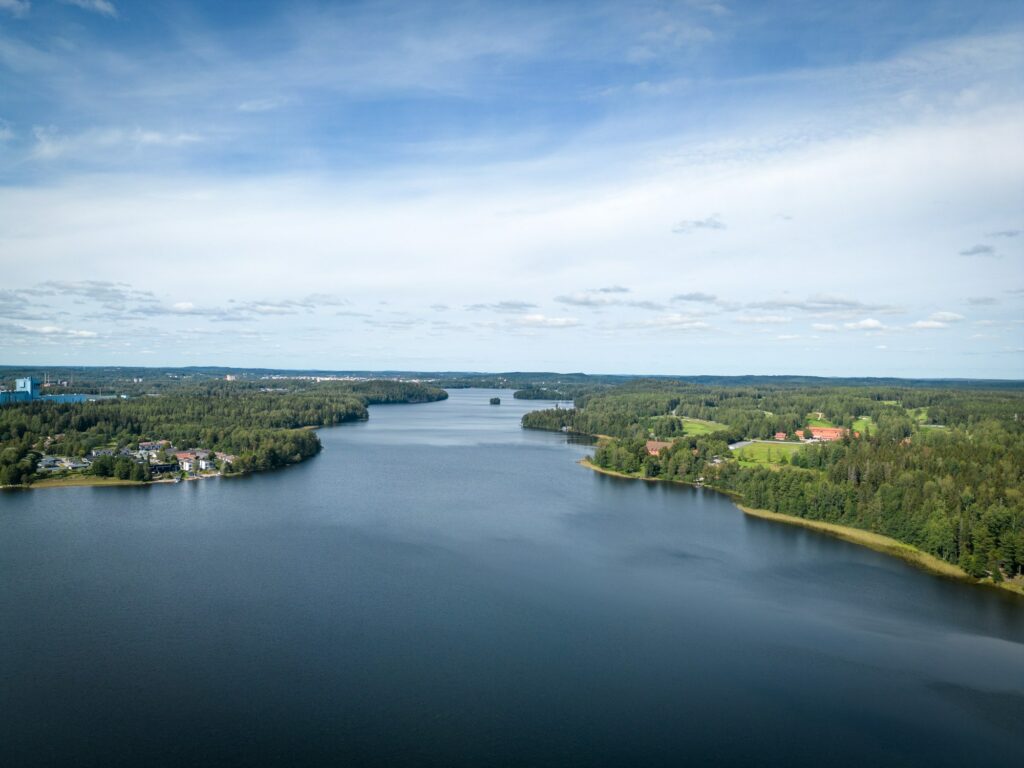
The Häme Rebellion likely inspired local folklore in Hämeenlinna, the veracity of which is difficult to confirm. For example, Poltinaho is said to have received its name because Christians were burned at the stake there. The name of Lake Katumajärvi (Lake of Regret), meanwhile, is thought to be related to a situation where residents of Hämeenlinna, baptized into the Catholic faith at Laurinlähde in Janakkala, had a change of heart upon returning home. They reportedly washed away their baptism with lake water and hurried secretly to the islands and shores of the lake to sacrifice to their former gods.
It is possible that the name Katumajärvi originally had nothing to do with the feeling known as regret (katumus). It is also possible that the stories associated with Katumajärvi were inspired by the lake’s name, rather than the other way around. However, it is indisputable that several Iron Age sacred sites were located on the shores of Katumajärvi. While a specific hiisi grove cannot be identified in the area based on place names or oral tradition, one could well have existed, for example, near Käikälänlähde or one of the cup-marked stones located on the shore.
The destruction of the hiisi sites
Inhumation burials at pagan burial grounds and sacrifices performed during the journey to church are examples of the transitional phase during which Christian churches, cemeteries, and even former sacrificial springs dedicated to Catholic saints gradually replaced the hiisi sites as the centers of people’s religious life and worldview. Gradually, the world of legends, stories, dreams, and visions also changed. This is evident, for example, in stories where the Virgin Mary is seen sitting on a branch of the Tupsumänty pine at Utterinvuori on the morning of Lady Day. A contrasting setting is known in Lammi, where a guardian spirit named Kaisa, praised as powerful and good, was known to live in the church and had carried large millstones to the end of the church building.
A large part of the Catholic Church’s conversion work involved appropriating old sacred sites of the ancient faith for the church’s use. Therefore, it is interesting that at the “tip” of the previously mentioned Kuuliaistenmäki, perhaps exactly at the site of the ancient karsikko right by the road, there is a place called Kirkkokallio (Church Rock), which has even been suspected of being the site of Renko’s first church.
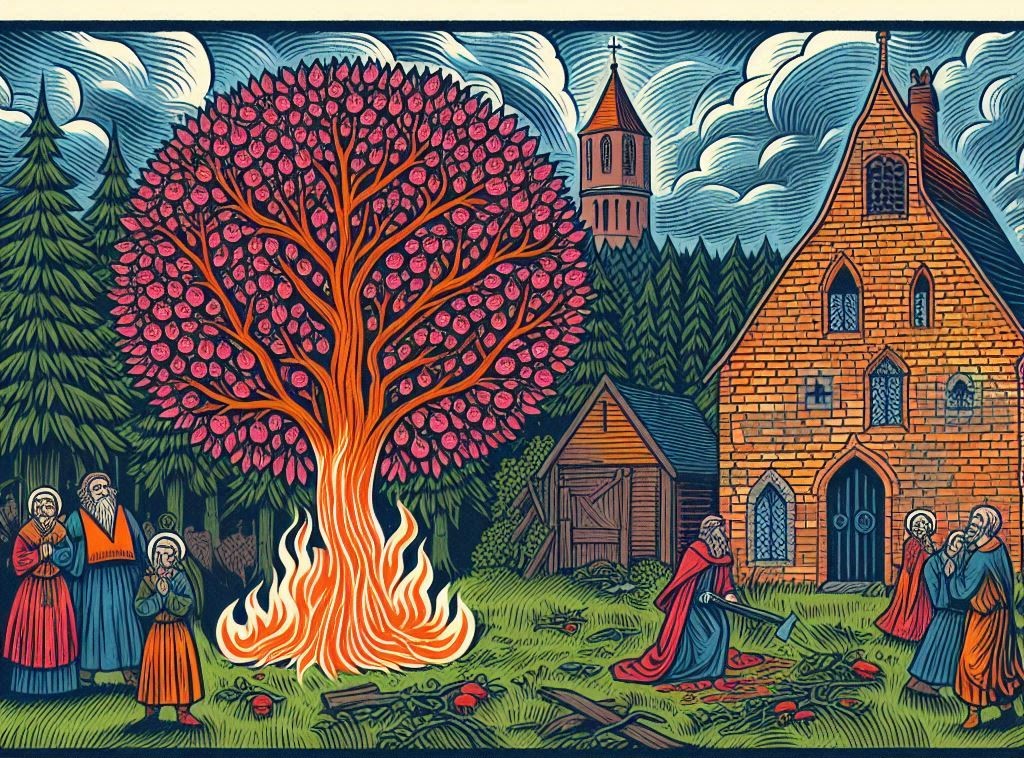
The suspicions regarding Kirkkokallio have likely never been confirmed, but it is indisputable that many of our old churches were built, for example, on top of prehistoric burial grounds. In place of old annual festivals like Ukonvakat, markets dedicated to Catholic saints began to be organized, where drinking and court sessions continued as before.
Crime and punishment
The methods of the Catholic Church can be considered quite soft compared to what happened after the Reformation. For example, Sigfrid Antinpoika likely referred to Catholic times when he told his interrogators that his ancestors had never been summoned to court for drinking from Ukko’s chalice. Stories from elsewhere in Finland tell of some Catholic priests even participating in similar rituals themselves. In all cases, the coexistence of the “pagan people” and the Catholic Church was certainly not always so blissful, but the Lutheran Church’s approach was, in any case, a degree harsher. From the 17th century onwards, it sought to ruthlessly destroy all sites it considered pagan, which led to both sacrificial trees in house yards and separate sacred groves being razed to the ground.
As a result of the church’s aggressive demonization campaign, the perception of hiisi sites began to change among the people. Gradually, the original meaning of these groves as sacred places was forgotten, and people began to equate the word ‘hiisi’ with hell. Strange hiisi-related place names encountered here and there, along with the odd stone structures and cup-marked stones in these locations, sparked stories of hiisi giants and great devils who lived on hiisi mountains and threw massive boulders at churches.
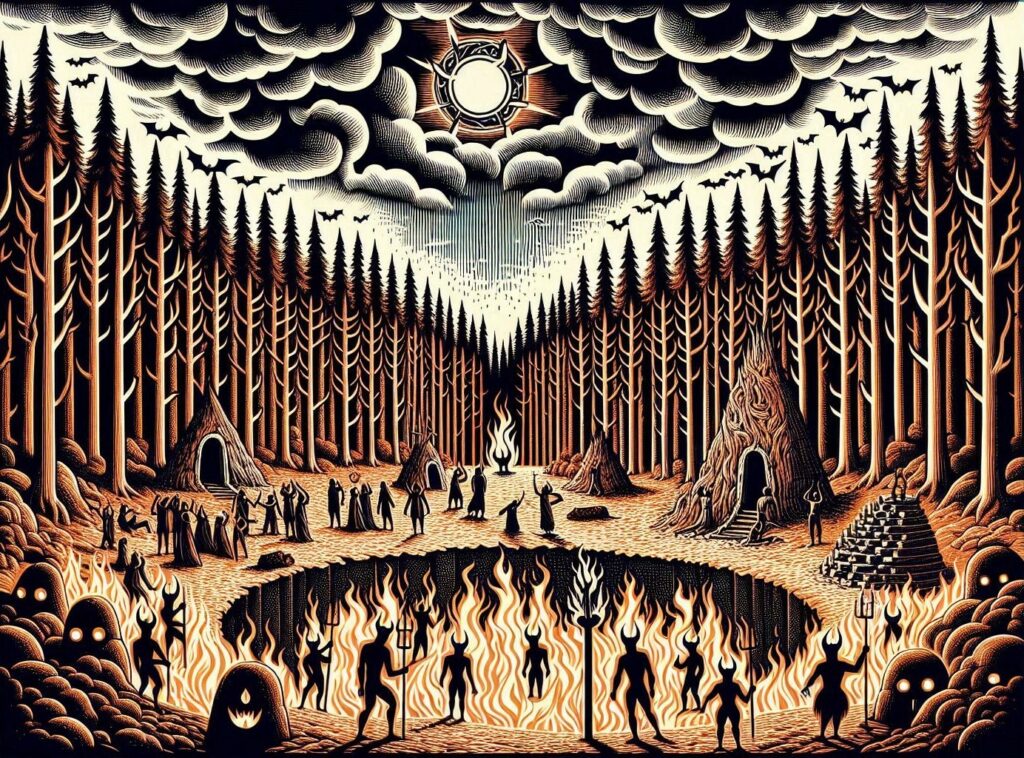
This kind of collective forgetting seems peculiar in the sense that the people had been accustomed for centuries to transferring vast amounts of information from one generation to another, for example, in the form of memorized belief stories. This may be explained by the fact that with the Reformation, a time began when remembering certain old things was anything but healthy. This was experienced by Sigfrid Antinpoika, among many others, who was found guilty of practicing idolatry and witchcraft at the court sessions of Hauho, Tuulos, and Lammi. He was sentenced to death for his actions.
From hiisi sites to households
Linguist Mauno Koski has suggested that due to the change in burial customs brought by Christianity, the cult of the deceased lost its significance, and hiisi sites began to be established again in the backwoods for the worship of nature deities. Churches and their associated cemeteries took the place of the hiisi sites in the center of villages, and the hiisi were, in a sense, pushed back into the wilderness where there were no deceased to be worshipped. Thus, for a moment, there was a return to the starting point of the hiisi culture before the tradition disappeared entirely.
On the other hand, academician Anna-Leena Siikala has stated that with Christianity, the old gods lost their status, and the significance of the deceased grew. This contradiction can be explained, in addition to the differing views of researchers, by the fact that it was specifically in the hiisi sites that the old gods experienced a kind of brief renaissance before the entire hiisi culture faded into oblivion. In the home circle, however, people still served the spirits of the deceased, who moved from the hiisi sites to the households to take on roles such as the home protector or the kiln elf.
Sources
Hillebrandt, Kaija: Paavolankulma – Ancient remains, leisure life, and golf (1999)
Ilola, Antti: In Renko of old – Myth and truth (2004)
Jokipii, Mauno: The Crusade to Häme – Swedish foreign policy until the battles of the Neva 1240-1242, in Peltovirta, Jukka (ed.) Hämeen käräjät I (2000)
Juva, Mikko; Niitemaa, Vilho; Tommila, Päiviö (eds.) Documents of Finnish History 1 (1968)
Kuuliala, Wiljo-Kustaa: Phases of Kalvola (1948)
Melander, K. R.: Some information about the worship of Ukko and the land spirit in our country in former times, in the publication Virittäjä 1/1932 (1932)
Paikkala, Sirkka (ed.) Finnish Place Name Book (2007)
Salokannel, Akseli: The Book of Vanaja (1955)
Salokannel, Akseli: Old Vanaja (1959)
Saukkonen, Jyri: Hämeenlinna inventory 1984 (1984)
Siikala, Anna-Leena: Mythology of the Baltic Finns (2012)
Digital Name Archive:
Arohonka, Ossi: Pyhämäki, Kalvola (Kotus, 1952) [Pyhämäki (Kotus, 1952) – Name Archive]
Salo, Aukusti: Helvalankärki, Kalvola (Kotus, 1992) [Helvalankärki (Kotus, 1992) – Name Archive]