Maintenance of Green Spaces and Parks
Green area maintenance is a constantly evolving process. New areas come under maintenance as urban planning progresses, and conversely, older areas may be removed for other land use.
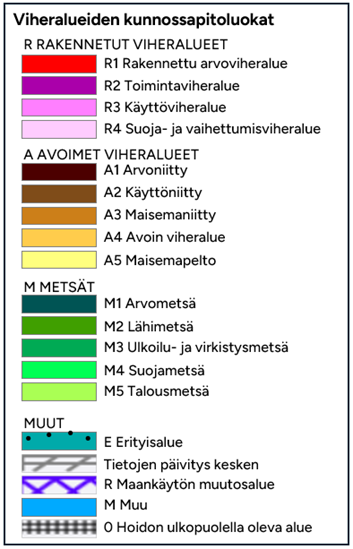
Hämeenlinna’s green areas are maintained in accordance with the national RAMS maintenance classification. This classification guides the maintenance of built green areas, open spaces, forests, and protected areas, and defines their quality level and maintenance measures based on their intended use, environmental values, and usage rate. The RAMS classification considers amenity, safety, and functionality, as well as the objectives of biodiversity, climate resilience, and a sustainable urban environment.
The maintenance class is defined based on the area’s characteristics, intended use, and quality objectives. In parks and recreational areas within the city centre, maintenance is generally more intensive than in more natural green areas or local forests. The aim is for each green area to be maintained in a manner consistent with its use and environment. The level of green area maintenance has been approved by the Urban Structure Board, and the RAMS classification for new areas is determined during the planning phase.
For city residents, green area maintenance is primarily visible as tidy parks, emptied litter bins, well-kept plantings, safe playgrounds, maintained pathways, and cared-for trees. Maintenance also includes promoting biodiversity, controlling invasive species, and maintaining the structures and equipment of green areas.
Detailed Explanations of Maintenance Classes
R CLASSES – Built Green Areas
More or less built green areas, the maintenance objective of which is to keep the area in accordance with the plan. The construction of green areas has taken into account wear and tear caused by use.
R1 Valued Built Green Area

R1 class, or valued built green areas, are valuable green areas constructed to a high standard using quality materials. They are typically valuable sites due to their horticultural culture, art, cultural heritage, architecture, or other features defined by the landowner.
Maintenance of the area is intensive, and surfaces are kept free of litter, neat, and clean. Maintenance operations in built green areas are guided by use and maintenance plans, which are tailored to the requirements of each site. In addition, any protection regulations for the area are taken into account in green area maintenance.
Due to intensive maintenance, R1 class parks are expensive to maintain and are few in number. In Hämeenlinna, R1 class parks include only the historical and renovated Tori Park and Kirkkopuisto, Laivarannanpuisto, Ystävyydenpuisto, Sibeliuksen Park, and Itsenäisyyden Park in the city centre.
R2 Activity Green Area

R2 activity green areas are, as their name suggests, areas reserved for various activities such as play, exercise, or transit. These include, for example, playgrounds, local sports facilities, and cemeteries. Activity green areas can also serve as venues for various events. However, sports fields or playing fields are not included in this maintenance class.

The aim of maintaining an activity green area is to keep it user-friendly and functional. There should be no litter that detracts from the general appearance, and hazardous litter is removed immediately.
R3 Utility Green Area
Utility green areas are located in urban and densely populated areas and are part of the ecological corridor network. R3 maintenance class areas offer users various opportunities for outdoor recreation, relaxation, enjoyment, and experiences outdoors. Utility green areas include, for example, market square vegetation, street tree plantings, and vegetation and seating areas in property yards. The objective of maintenance for these green areas is to preserve their safety and usability.
R4 Buffer and Transition Green Area

R4 maintenance class green areas are transitional zones between built and natural environments, such as buffer strips and areas related to stormwater management, for example, wetlands and open ditches. The purpose of buffer and transition green areas is to provide places for relaxation and outdoor activities in the urban environment, as well as visual, noise, and dust protection. In addition, green areas of this class also function as part of the ecological corridor network and provide a diverse habitat for flora and fauna. Maintenance aims to preserve and strengthen these values.
A CLASSES – Open Green Areas
The open green area maintenance classes include various open areas, both man-made and naturally formed, such as meadows and fields. Examples of man-made meadows are open areas created by grazing or cultivation. Naturally formed open areas, on the other hand, include rocky heaths or flood meadows. The vegetation in open green areas can be, for example, cultivated or wild plants, in addition to individual trees and shrubs or groups of them.
A1 Valued Meadow

Valued meadows are classified as meadows that are valuable or important due to their landscape, cultural heritage, or biodiversity values. They also offer users experiences related to these aspects. The maintenance of valued meadows takes into account any protection regulations and special values of each area. The aim is to preserve, highlight, and strengthen these values through maintenance measures.
A2 Utility Meadow

Utility meadows are meadows that are part of a park, yard, or recreational area. They offer users opportunities for outdoor activities and hobbies. The vegetation in utility meadows is usually low due to heavy use. The aim of maintenance is to keep the area usable and open. The usability of the areas is also improved by maintaining paths and trails.
R3 Landscape Meadow

Landscape meadows are open or semi-open meadows, or parts thereof, intended for the protection of open cultural landscapes and herbaceous natural vegetation. Like utility meadows, landscape meadows can also be part of a park, but unlike utility meadows, landscape meadows are not designed to withstand wear and tear. Movement there is directed to built pathways.
In the maintenance of landscape meadows, care is taken to ensure the success of flowering species, and efforts are made to strengthen the ecological diversity of the area. The main goal, however, is for the area to retain its unique characteristics.
A4 Open Green Area

A4 green areas include, for example, coastal meadows, areas under power lines, and fields that are no longer cultivated. Unlike the previous open green area classes, A4 areas are not primarily intended for recreational use. The aim of maintaining open areas is to prevent overgrowth and keep important views open. However, in some areas, such as under power lines, saplings are allowed to grow.
A5 Landscape Field

Landscape fields are areas where annual or perennial useful and ornamental plants are cultivated. They are part of a park, recreational area, or cultivated landscape. Field margins are also included in landscape fields. Cultivation on fields owned by the city is managed by the field tenants.
M CLASSES – Forests
Urban forests are areas covered by trees, where the vegetation is natural. Urban forests are important local recreational areas for city residents, offering many benefits. They bind dust and noise, absorb stormwater, and obscure views to noise sources, such as busy streets. In addition, they provide habitats for many organisms and enable their movement along green corridors.
Urban forests differ in their management from commercial forests. The vitality of forests in built environments deteriorates faster than in larger forests. Trees along routes and local forests need to be managed more intensively for user safety and landscape reasons.
Forest maintenance classes include M1 Valued Forests, M2 Local Forests, M3 Outdoor and Recreational Forests, M4 Protective Forests, and M5 Commercial Forests. Forest and recreational areas are managed according to specific forest management plans or separately prepared management plans.
Maintenance Operating Area
Green areas change as the city develops. As urban planning progresses, new areas come under maintenance, and older areas are removed for other uses, such as construction. In zoned areas, there are a total of over 960 hectares of green areas. Of these, approximately 138 hectares are built green areas according to the RAMS R-class, such as parks and street green areas. Open green areas (A-class), such as fields and meadows, account for approximately 134 hectares. The majority of green areas are local forests (M-class), totalling approximately 575 hectares. The maintenance of local forests is mainly handled by the city’s nature services.
Green area maintenance operates throughout the Hämeenlinna region. In the urban areas of Lammi, Tuulos, Hauho church village, Eteläiset, and Alvettula, the maintenance of traffic routes and green areas, parks, and outdoor sports facilities falling under the city’s responsibility is currently handled by Destia Oy.
- You can contact us regarding the maintenance of parks and forests, and playgrounds via the feedback system
- Lammi, Tuulos, Hauho church village, Eteläiset, and Alvettula urban areas: Destia customer service number p. 040 681 9023, weekdays 9 AM – 3 PM. Read more about Destia’s maintenance services.
- Report malfunctioning outdoor lights
Biodiversity
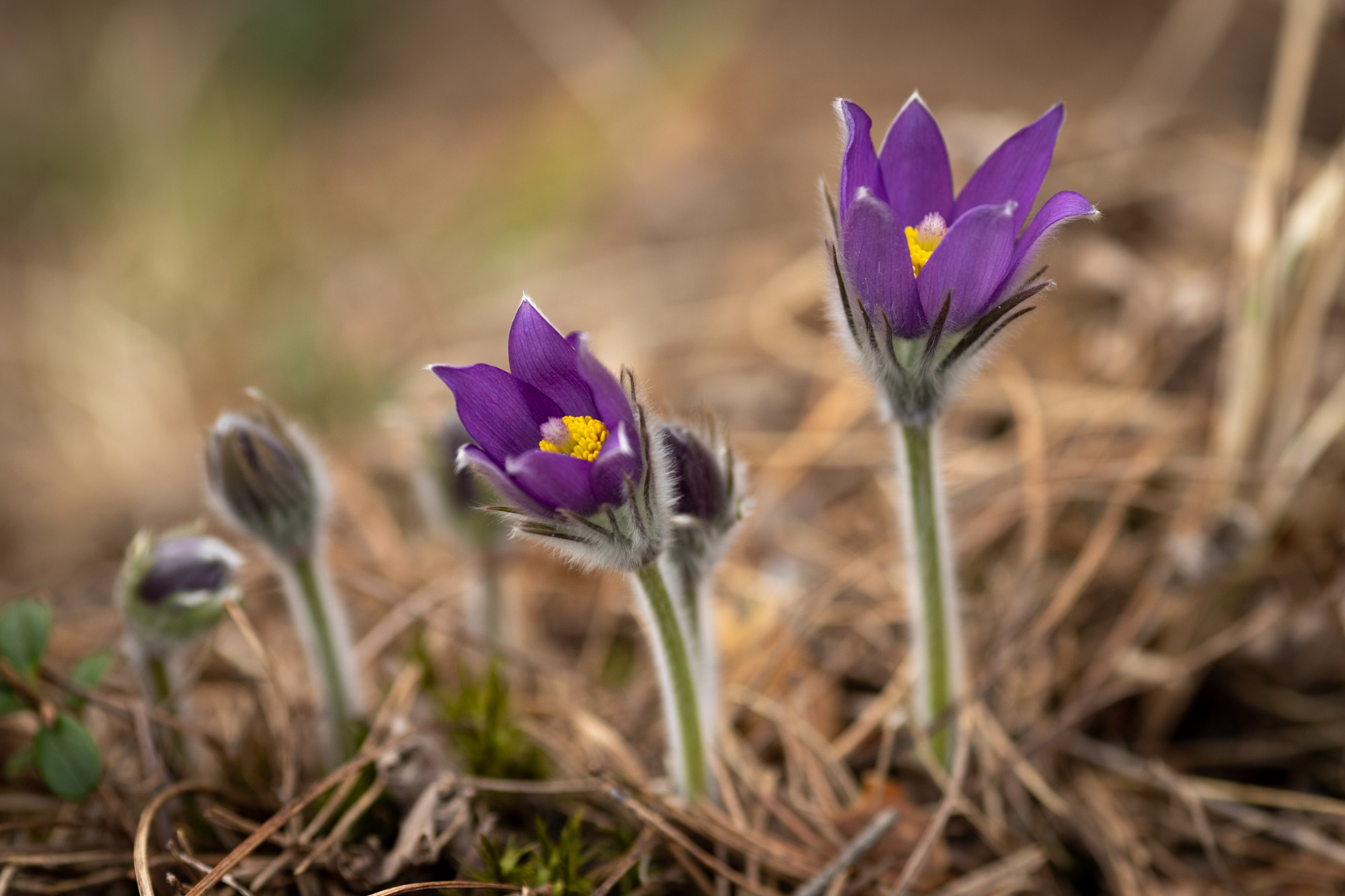
Biodiversity is part of green area maintenance. Green areas are maintained in a way that supports the habitats of different species and strengthens the vitality of urban nature.
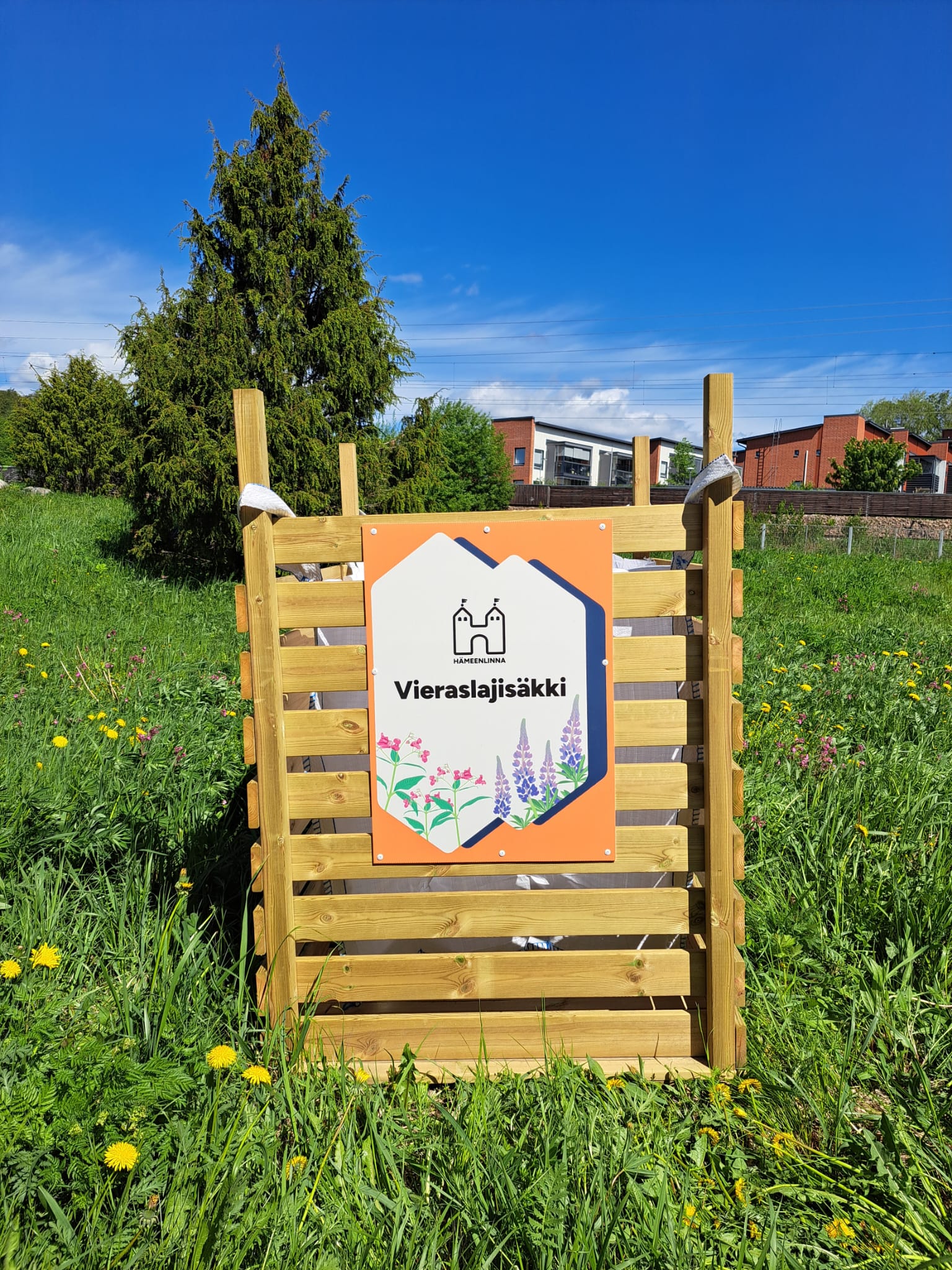
Invasive Species Control
Controlling harmful invasive species protects biodiversity and prevents the spread of species into the environment.
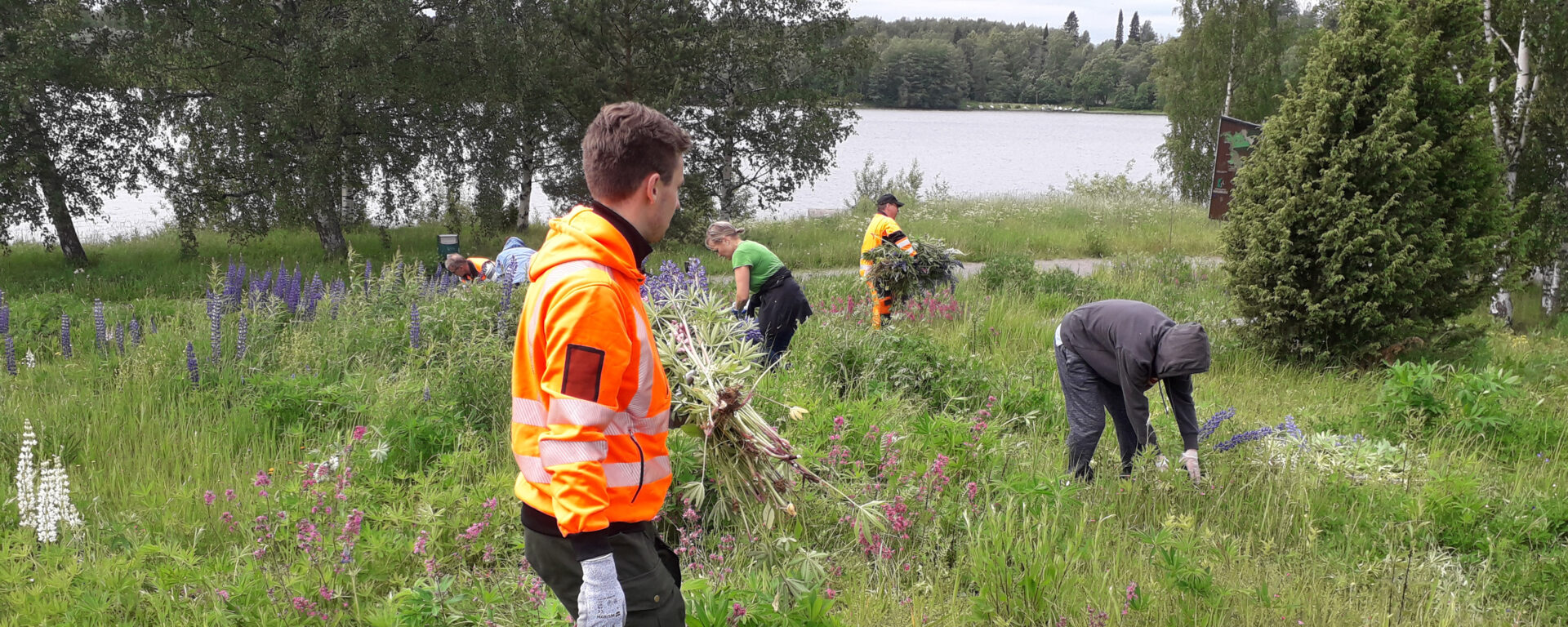
Become a Park Godparent or Volunteer in Your Local Area
Participate in improving the amenity of your local environment.
Organising an Event in a Park or Street Area
If you are planning an event in a park, green area, or street area, you will need the landowner’s permission to use the area. Depending on the nature of the event, other permits and notifications may also be required.